

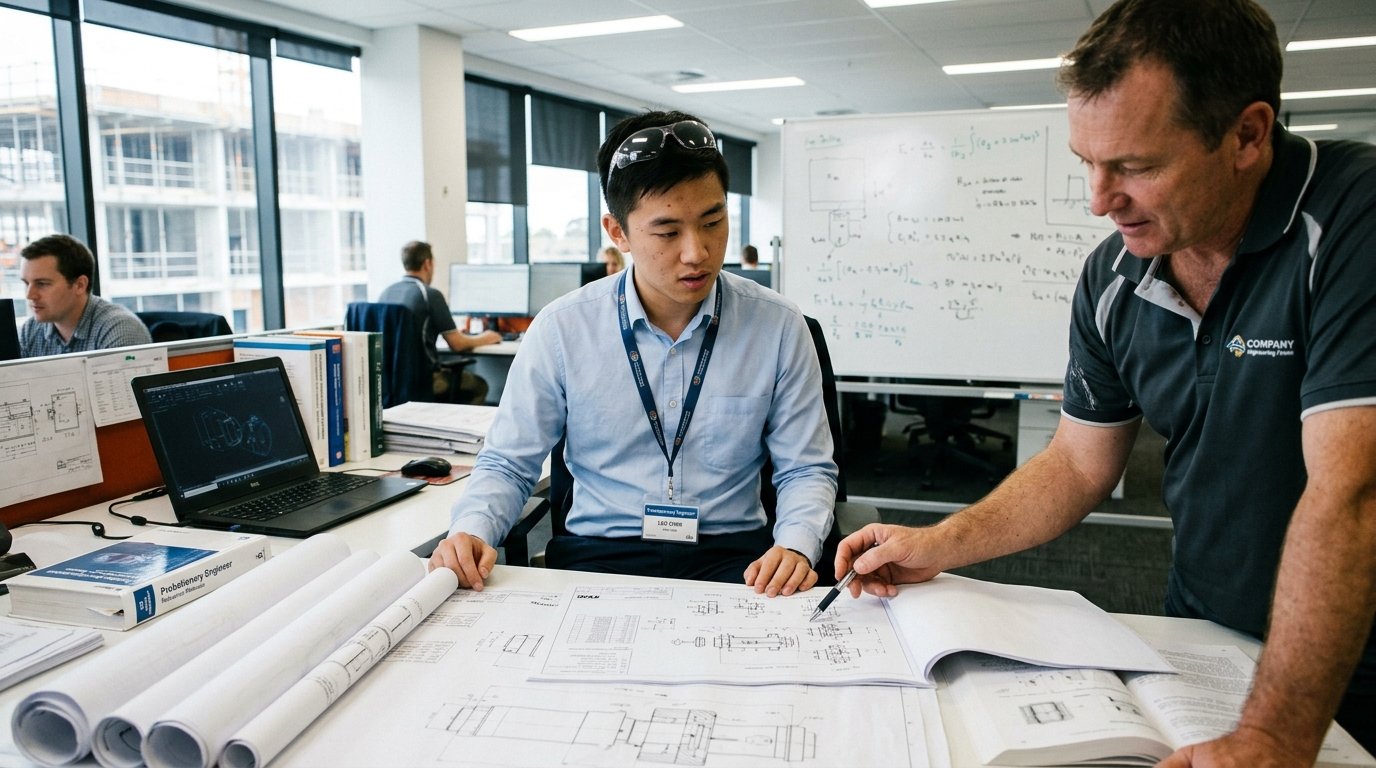
Starting a career in engineering is a major milestone, and the transition from academic learning to professional practice is both exciting and challenging. One of the most important stages in this journey is becoming a Probationary Engineer. This role is designed to help fresh graduates step into real-world engineering environments while being guided and evaluated by experienced professionals.
A probationary engineer phase is not just a job position it is a structured learning period that builds the foundation for long-term success in the engineering profession. During this stage, individuals apply theoretical knowledge in practical settings, develop technical skills, and learn how real engineering projects operate.
In this article, we will explore the meaning of a probationary engineer, key responsibilities, required skills, evaluation process, and career growth opportunities.
What is a Probationary Engineer?
A Probationary Engineer is an entry-level professional who works under supervision in an organization for a fixed probation period. This period typically lasts from six months to two years, depending on the company and industry.
During this time, engineers gain hands-on experience, adapt to workplace culture, and demonstrate their ability to handle technical and professional responsibilities. This phase is commonly found across multiple fields, including:
- Civil Engineering
- Mechanical Engineering
- Electrical Engineering
- Software Engineering
- Chemical Engineering
- Industrial Engineering
Each discipline may have different tasks, but the overall goal remains the same: to prepare engineers for independent and responsible roles in their careers.
Roles and Responsibilities of a Probationary Engineer
The role of a probationary engineer is both learning-focused and performance-driven. They are expected to contribute to projects while being guided by senior engineers and managers.
Supporting Engineering Projects
Probationary engineers actively assist in various stages of project development within engineering organizations. Their tasks may include technical drawings, data collection, simulations, and assisting in quality checks.
They also support teams involved in project management, helping ensure that tasks are completed according to schedule, safety standards, and technical requirements.
Learning Organizational Systems
Another important responsibility is understanding how engineering organizations operate. This includes learning about company policies, workflow systems, and regulatory compliance procedures.
By understanding organizational processes early, engineers become more efficient and adaptable in professional environments.
Working with Engineering Teams
Engineering work is highly collaborative. Probationary engineers work closely with technicians, supervisors, consultants, and senior engineers in multidisciplinary teams.
This experience helps them develop communication skills, teamwork abilities, and professional behavior required in real-world engineering environments.
Key Skills Required for Success
To succeed as a Probationary Engineer, individuals need a combination of technical and soft skills.
Technical Skills
Strong technical knowledge is essential in engineering roles. This includes:
- Engineering software proficiency
- Data analysis and interpretation
- Understanding safety standards
- Knowledge of design codes
- Simulation and modeling skills
These skills ensure accuracy and reliability in engineering tasks.
Soft Skills
Soft skills are equally important for career growth. Key abilities include:
- Problem-solving mindset
- Communication skills
- Team collaboration
- Time management
- Adaptability to new environments
- Critical thinking
Together, these skills help engineers work efficiently and grow into leadership roles.
Performance Evaluation During Probation
The probation period is structured around regular performance evaluations. Supervisors assess engineers based on multiple criteria such as:
- Quality of work output
- Technical accuracy
- Professional behavior
- Ability to take initiative
- Response to feedback
- Independence in tasks
These evaluations help identify strengths and areas for improvement. Constructive feedback is an essential part of this process, helping engineers grow professionally and prepare for permanent positions.
Common Challenges Faced by Probationary Engineers
Transitioning from education to industry is not always easy. Many new engineers face challenges such as:
Bridging Theory and Practice
Academic knowledge often differs from real-world engineering applications. Engineers must learn how to apply theoretical concepts in practical, cost-effective, and safety-compliant ways.
Handling Workplace Pressure
Deadlines, project expectations, and technical responsibilities can create pressure. Developing time management and stress-handling skills is essential.
Building Confidence
Many new engineers hesitate to ask questions or take initiative. However, learning through guidance and mentorship is a normal and important part of this stage.
Career Growth After Probation
Successfully completing the probation phase opens the door to long-term career development in engineering.
Full Engineer Confirmation
After probation, engineers are usually confirmed as permanent employees with increased responsibilities, including project ownership and independent tasks.
Specialization Opportunities
Engineers may choose to specialize in areas such as:
- Structural engineering
- Renewable energy systems
- Automation and robotics
- Software development
- Project management
Specialization improves expertise and career value.
Leadership Roles
With experience, engineers can move into leadership positions such as:
- Project Manager
- Technical Lead
- Operations Manager
- Engineering Consultant
These roles require both technical knowledge and strong leadership skills.
Strategies for Success as a Probationary Engineer
To build a strong foundation in engineering, probationary engineers should focus on continuous improvement.
Learn from Mentors
Mentorship plays a key role in professional growth. Learning from experienced engineers helps improve technical and decision-making skills.
Keep Records of Work
Documenting projects, tasks, and achievements helps during performance reviews and career evaluations.
Focus on Continuous Learning
Engineering is constantly evolving. Learning new tools, technologies, and certifications helps improve career opportunities.
Build Professional Behavior
Reliability, discipline, and ethical conduct create a strong professional reputation, which is important for long-term success.
Conclusion
The role of a Probationary Engineer is a critical stage in every engineering career. It provides structured training, real-world experience, and professional development opportunities that shape future success.
By developing technical expertise, improving soft skills, and learning from real-world challenges, engineers can successfully transition into permanent roles and advance toward specialization and leadership positions.
With the right mindset, dedication, and continuous learning, the probationary phase becomes a powerful foundation for a rewarding and successful engineering career.
FAQs – Probationary Engineer
What is a probationary engineer?
A Probationary Engineer is a newly hired engineering graduate who works under supervision for a fixed period to gain practical experience and prove their professional capability.
How long is the probation period for engineers?
The probation period usually lasts between 6 months to 2 years, depending on the organization, industry, and job role.
What does a probationary engineer do?
A probationary engineer supports engineering teams by assisting in project work, preparing technical documentation, analyzing data, and learning organizational processes under senior supervision.
Which fields can have probationary engineers?
Probationary engineers can work in multiple disciplines such as civil engineering, mechanical engineering, electrical engineering, software engineering, chemical engineering, and industrial engineering.
