

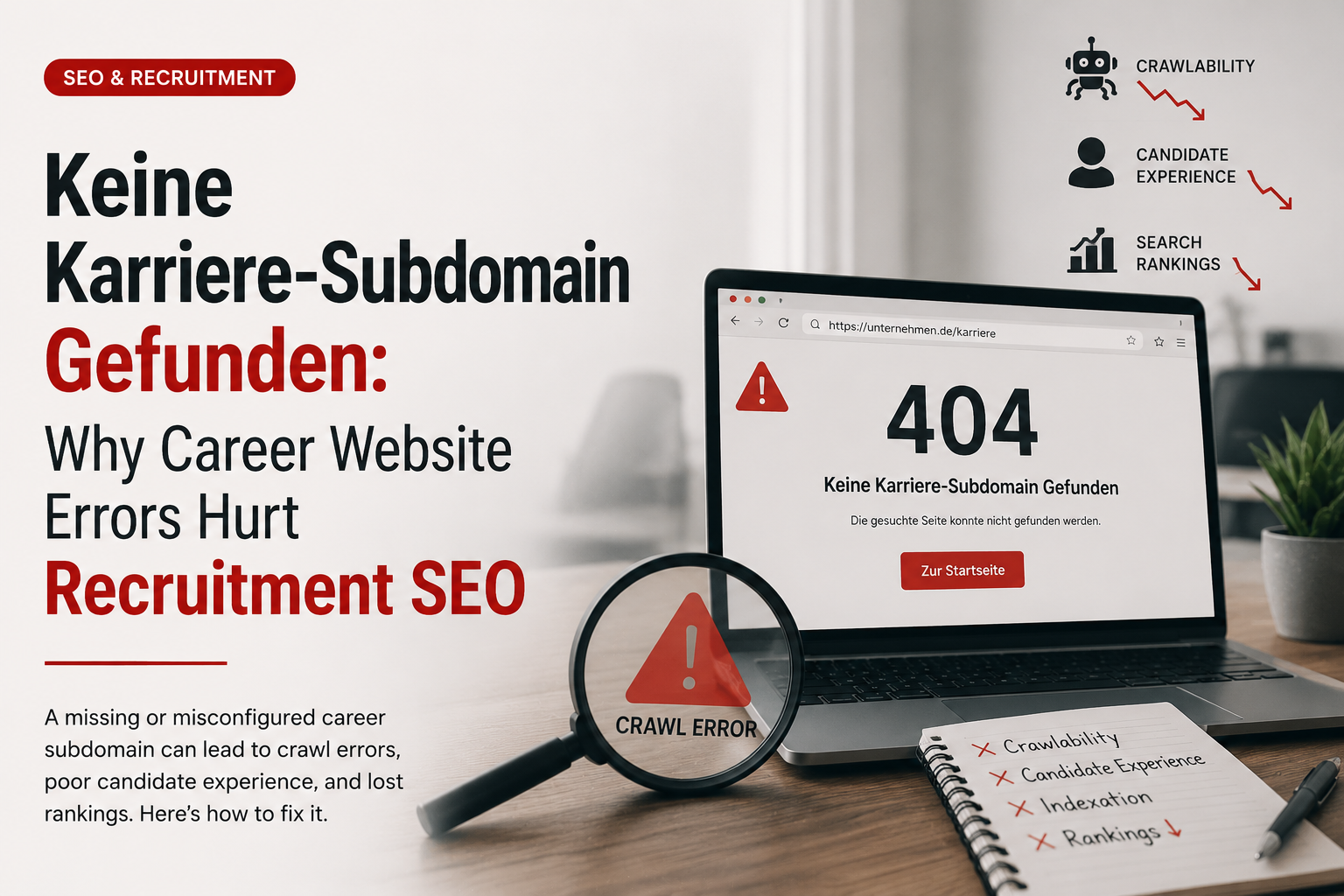
In today’s digital hiring environment, a company’s career website is often the first interaction potential candidates have with an employer. Businesses invest heavily in recruitment campaigns, employer branding, LinkedIn advertising, and job portals to attract skilled professionals. However, technical website issues can silently damage recruitment performance before candidates even submit an application.
One increasingly searched phrase in German-speaking markets is keine karriere-subdomain gefunden. The keyword commonly appears when users encounter missing career portals, broken recruitment pages, or technical domain configuration problems while searching for company job opportunities online.
Although this issue may appear minor at first glance, it can significantly affect:
- Recruitment performance
- Employer branding
- SEO visibility
- Candidate trust
- Conversion rates
- Search engine indexing
As competition for talent grows across Europe and global markets, organizations can no longer afford weak digital recruitment infrastructure.
The Rise of Digital Recruitment Platforms
Over the past decade, recruitment has shifted almost entirely online. Traditional newspaper job advertisements have largely disappeared, replaced by career portals, mobile recruitment apps, and AI-powered hiring platforms.
According to Statista, more than 80% of job seekers now search for employment opportunities online before applying. LinkedIn alone surpassed 1 billion registered users globally in 2025, while online recruitment spending continues to grow across Europe.
Germany, Austria, and Switzerland represent some of Europe’s most digitally advanced hiring markets. Companies increasingly rely on:
- Dedicated career websites
- ATS (Applicant Tracking Systems)
- Recruitment automation tools
- Employer branding campaigns
- Mobile-friendly application systems
- Search engine optimized job listings
In this environment, technical errors can directly reduce candidate acquisition.
What Does “Keine Karriere-Subdomain Gefunden” Mean?
The phrase keine karriere-subdomain gefunden translates roughly to “no career subdomain found” in English.
This message typically appears when:
- A company’s career page is misconfigured
- DNS records are missing
- Recruitment software integration fails
- A subdomain is deleted or moved
- SSL certificates are invalid
- Internal redirects are broken
- Search engines index outdated URLs
Many organizations separate their recruitment portal from the main corporate website using subdomains such as:
- careers.companyname.com
- jobs.companyname.com
- karriere.companyname.de
When these subdomains malfunction, job seekers may encounter errors that interrupt the application process.
Why Career Subdomains Matter for SEO
Search engine optimization is no longer limited to marketing pages. Recruitment SEO has become a major strategy for companies competing for skilled workers.
Google processes millions of job-related searches every day. Job seekers frequently search using terms such as:
- Software engineer jobs Berlin
- Marketing manager Munich
- Remote developer Germany
- Data analyst careers Europe
Companies with properly optimized career pages gain significant advantages in organic visibility.
However, when technical issues generate messages like keine karriere-subdomain gefunden, search performance can decline rapidly.
Key SEO Problems Caused by Career Subdomain Errors
1. Indexing Failures
Search engines may fail to crawl or index job pages correctly.
2. Broken User Journeys
Candidates who encounter errors often leave immediately.
3. Higher Bounce Rates
Technical failures increase bounce rates, negatively affecting SEO performance signals.
4. Reduced Trust
A broken career portal creates doubts about company professionalism.
5. Lost Organic Traffic
Missing or inaccessible pages reduce keyword visibility.
In competitive hiring sectors such as IT, finance, engineering, and healthcare, these problems can directly impact recruitment success.
The Importance of Employer Branding
Employer branding refers to how a company is perceived by current employees, job candidates, and the broader workforce.
A 2025 LinkedIn Talent Solutions report found that 75% of job seekers research an employer’s online reputation before applying.
Career websites play a central role in this process.
Candidates expect:
- Fast-loading pages
- Mobile optimization
- Clear job descriptions
- Easy application processes
- Authentic company culture content
- Transparent hiring information
If applicants encounter errors like keine karriere-subdomain gefunden, confidence in the employer may decline instantly.
This is particularly important because modern candidates often compare multiple employers simultaneously.
Mobile Recruitment and Technical Expectations
Mobile recruitment continues to dominate global hiring trends.
According to Appcast recruitment data, more than 67% of job applications now originate from mobile devices. Younger professionals especially expect frictionless digital experiences.
Mobile users are less patient with technical problems.
Common reasons candidates abandon applications include:
- Slow loading times
- Login issues
- Broken redirects
- Complicated forms
- Missing pages
- Technical error messages
Google research indicates that even a one-second delay in mobile loading speed can significantly reduce user engagement.
This makes technical optimization essential for modern recruitment websites.
The Relationship Between Technical SEO and Recruitment
Technical SEO ensures websites remain accessible, crawlable, and optimized for search engines.
For recruitment portals, technical SEO involves:
- XML sitemaps
- Structured job posting markup
- HTTPS security
- Mobile responsiveness
- Clean URL structures
- Fast server response times
- Internal linking optimization
Many recruitment systems rely on third-party ATS providers. If integrations are poorly configured, career subdomains may fail unexpectedly.
When this happens, search engines may remove job pages from search results entirely.
Google for Jobs and Search Visibility
Google for Jobs has transformed how candidates discover employment opportunities.
The platform aggregates job postings directly into search results, making visibility more competitive than ever.
Companies that optimize recruitment pages correctly benefit from:
- Higher click-through rates
- Increased application volume
- Better candidate targeting
- Improved organic exposure
However, technical issues can prevent listings from appearing in Google for Jobs.
For example:
- Invalid schema markup
- Broken redirects
- Missing structured data
- Crawl errors
- Unavailable subdomains
These problems often trigger indexing issues that reduce recruitment visibility.
Real-World Costs of Recruitment Website Failures
Technical recruitment problems have measurable financial consequences.
According to research from the Society for Human Resource Management (SHRM), the average cost-per-hire in many industries exceeds $4,700.
For specialized roles such as cybersecurity, software engineering, and healthcare management, costs can be significantly higher.
When candidates abandon applications because of technical errors, organizations may face:
- Increased recruitment spending
- Longer hiring cycles
- Reduced application quality
- Lower employer trust
- Higher vacancy costs
Large enterprises receiving thousands of monthly applications can lose substantial opportunities from poorly maintained career infrastructure.
Common Causes of Career Subdomain Errors
Several technical issues can create problems associated with keine karriere-subdomain gefunden.
DNS Misconfiguration
Incorrect DNS records may prevent subdomains from resolving properly.
SSL Certificate Problems
Expired certificates can block secure access.
CMS Migration Errors
Website redesigns sometimes break recruitment URLs.
ATS Integration Failures
Third-party recruitment software may disconnect unexpectedly.
Redirect Loops
Improper redirects create inaccessible pages.
Hosting Downtime
Weak hosting infrastructure can cause intermittent outages.
Search Engine Cache Issues
Outdated indexed URLs may remain visible after structural changes.
Regular technical audits help prevent these problems.
Best Practices for Career Website Optimization
Organizations can significantly improve recruitment performance through proactive optimization.
1. Use Reliable Hosting
High-performance hosting improves uptime and loading speed.
2. Implement HTTPS Security
Secure websites improve user trust and SEO performance.
3. Optimize for Mobile Devices
Responsive design is essential for modern applicants.
4. Monitor Crawl Errors
Google Search Console helps identify indexing problems.
5. Create SEO-Friendly URLs
Simple URL structures improve discoverability.
6. Use Structured Data
JobPosting schema enhances Google for Jobs visibility.
7. Test Application Flows Regularly
Recruitment funnels should be tested continuously.
8. Improve Page Speed
Faster websites reduce bounce rates.
Organizations that prioritize technical performance often gain stronger recruitment results.
Recruitment Trends Shaping the Future
The future of recruitment is becoming increasingly data-driven.
Modern hiring strategies now include:
- AI candidate screening
- Predictive analytics
- Automated scheduling
- Personalized job recommendations
- Skills-based hiring
- Remote recruitment infrastructure
As digital hiring ecosystems become more advanced, technical reliability will become even more important.
Candidates now expect recruitment experiences comparable to major consumer technology platforms.
This means:
- Instant access
- Seamless navigation
- Mobile compatibility
- Transparent communication
- Fast application systems
Technical failures damage not only SEO performance but also employer credibility.
The Role of Analytics in Recruitment Optimization
Analytics platforms help organizations understand candidate behavior.
Key recruitment metrics include:
- Application completion rates
- Bounce rates
- Time on page
- Source traffic performance
- Conversion rates
- Mobile usability metrics
If career pages show abnormal bounce rates or reduced engagement, technical issues may be responsible.
Monitoring analytics helps companies identify problems before they significantly impact hiring.
Why User Experience Matters
User experience directly affects recruitment success.
According to Adobe Digital Insights research, users form opinions about websites within seconds.
Career pages should therefore provide:
- Clear navigation
- Fast access to jobs
- Simple forms
- Readable content
- Transparent hiring steps
- Accessible design
Complicated application systems often discourage qualified candidates.
A smooth experience improves:
- Candidate satisfaction
- Employer perception
- Application completion
- Search rankings
- Brand credibility
Cybersecurity and Recruitment Infrastructure
Cybersecurity is another growing concern for recruitment platforms.
Job applications often contain sensitive personal data, including:
- Names
- Addresses
- Employment history
- Educational records
- Identification details
Weak security systems may expose organizations to:
- Data breaches
- Legal liabilities
- GDPR compliance issues
- Reputation damage
Secure infrastructure and proper SSL implementation are essential for protecting candidate information.
International Recruitment and Localization
Global hiring has expanded rapidly due to remote work adoption.
Many companies now recruit internationally using multilingual career portals.
Localization strategies often include:
- Multi-language interfaces
- Region-specific job pages
- Local SEO optimization
- Country-based recruitment campaigns
In German-speaking markets, technical messages such as keine karriere-subdomain gefunden can significantly influence user trust because candidates expect highly structured digital experiences.
Localization quality therefore plays a major role in international recruitment success.
Future Outlook for Recruitment SEO
Recruitment SEO is expected to become even more competitive over the next decade.
Organizations that combine:
- Technical excellence
- Strong employer branding
- Fast mobile performance
- Structured job data
- High-quality content
- Reliable infrastructure
will likely attract better talent more efficiently.
Google’s search algorithms increasingly prioritize user experience and technical reliability. Companies ignoring technical recruitment issues may lose visibility to competitors with stronger digital ecosystems.
Read More Guide On: Everything You Need to Know About Using Myreadignmnaga Safely
Final Thoughts
Digital recruitment has evolved into one of the most important components of modern business growth. Career websites are no longer optional marketing assets — they are essential recruitment infrastructure.
Errors associated with keine karriere-subdomain gefunden may seem technical, but they can create serious consequences for employer branding, SEO visibility, candidate trust, and hiring performance.
As competition for skilled talent continues increasing across Europe and global markets, organizations must invest in reliable recruitment technology, optimized user experiences, and technically sound career platforms.
Companies that prioritize recruitment SEO, mobile usability, cybersecurity, and seamless application experiences will be better positioned to attract top talent in the digital economy.
Ultimately, strong technical foundations are just as important as compelling job offers. In the modern hiring landscape, a reliable and accessible career portal can become a major competitive advantage.
