

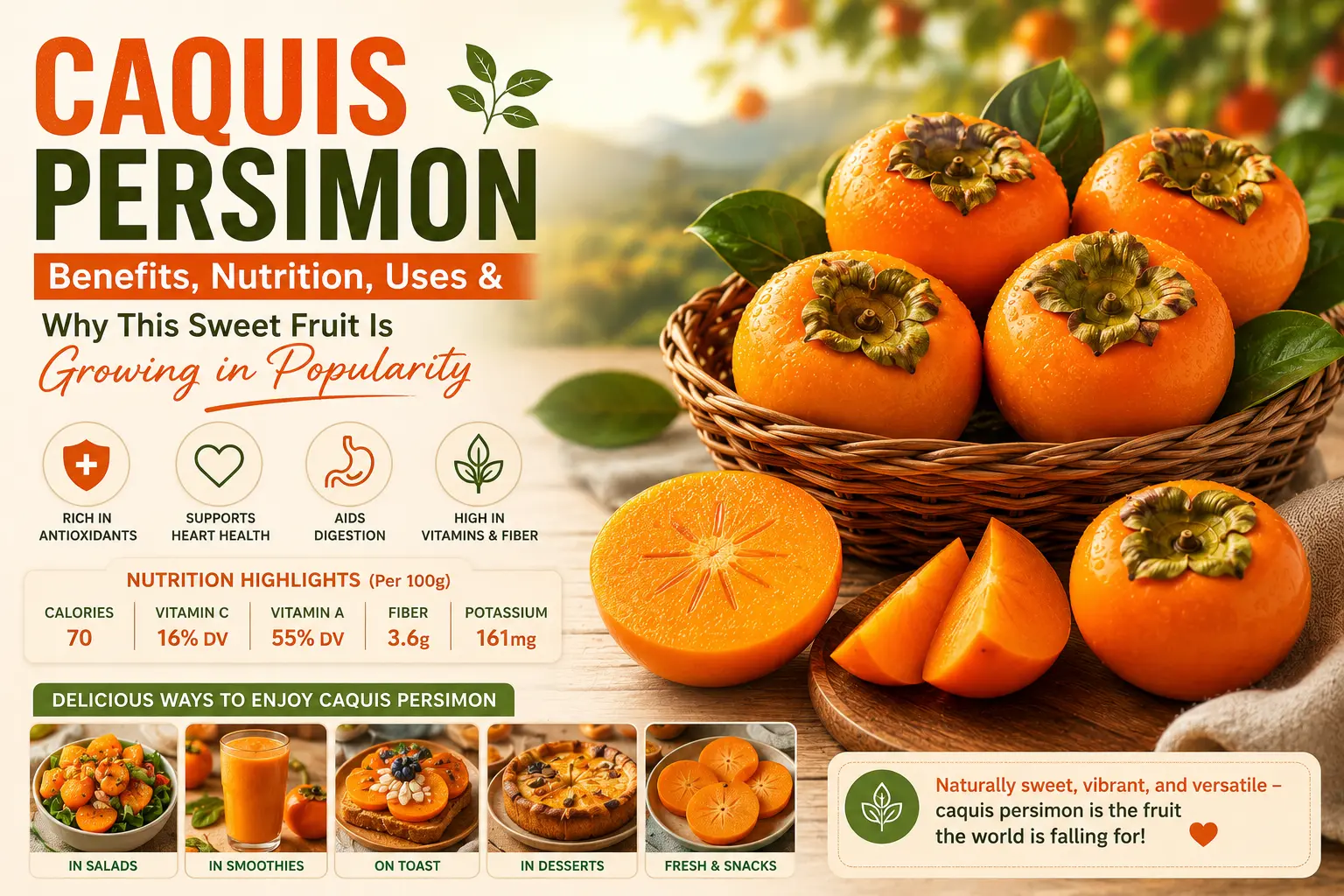
Bright orange, naturally sweet, and packed with nutrients, caquis persimon has become one of the most interesting fruits in modern produce markets. Known for its smooth texture, vibrant color, and honey-like flavor, this fruit continues to gain international recognition among consumers seeking healthy, flavorful alternatives to traditional seasonal fruits.
Originally cultivated for centuries in Asia and later developed commercially in Spain, persimmon varieties have expanded significantly across global markets. Today, supermarkets across Europe, the Middle East, and increasingly North America offer premium-quality persimmon fruit during harvest season.
But what makes this fruit special? Why has demand increased so rapidly in recent years? And how can you enjoy it at home?
Here’s everything you need to know.
What Is Caquis Persimon?
Caquis persimon refers to a premium persimmon fruit variety primarily associated with Spain, particularly the Ribera del Xúquer region in Valencia. It comes mainly from the Rojo Brillante cultivar, known for its glossy orange skin, firm flesh, and naturally sweet flavor.
Unlike softer traditional persimmons, this variety is often harvested and processed to remove astringency while maintaining firmness. That means it can be sliced like an apple while still delivering the rich sweetness persimmons are famous for.
Its flavor is often described as a combination of:
- Mango
- Apricot
- Peach
- Honey
- Pumpkin with caramel notes
This unique flavor profile makes it appealing both as a fresh snack and as an ingredient in sweet or savory dishes.
Nutritional Value: Small Fruit, Big Benefits
Persimmons are nutrient-dense while remaining relatively low in calories.
Nutrition Per 100g Fresh Persimmon (Approximate)
| Nutrient | Amount |
| Calories | 70 kcal |
| Carbohydrates | 18–19 g |
| Natural Sugars | 12–13 g |
| Fiber | 3.5 g |
| Vitamin A | ~55% DV |
| Vitamin C | ~14% DV |
| Potassium | ~160 mg |
| Manganese | ~17% DV |
Source references based on USDA FoodData Central and FAO fruit nutrition databases.
Health Benefits of Persimmon Fruit
1. Rich in Antioxidants
Persimmons contain powerful antioxidants including:
- Beta-carotene
- Flavonoids
- Tannins
- Lycopene
These compounds help protect cells from oxidative stress caused by free radicals.
2. Supports Eye Health
Because persimmons are rich in Vitamin A and beta-carotene, they contribute to healthy vision and may support long-term eye function.
Vitamin A is essential for:
- Night vision
- Corneal health
- Eye tissue maintenance
The deep orange color of the fruit is a visible sign of carotenoid concentration.
3. Excellent Source of Fiber
Fiber supports digestion, satiety, and gut health.
One persimmon can provide a meaningful portion of daily fiber intake, helping with:
- Regular digestion
- Healthy bowel movement
- Improved fullness after meals
4. Heart-Friendly Nutrients
Persimmons naturally provide potassium, antioxidants, and plant compounds linked to cardiovascular wellness.
Research has shown diets rich in fruits containing polyphenols may help support healthy cholesterol levels and circulation.
Global Production and Market Growth
Persimmons are no longer a niche fruit.
According to the Food and Agriculture Organization (FAO), global persimmon production exceeds 4 million metric tons annually, with major production concentrated in:
- China
- Spain
- South Korea
- Japan
- Brazil
Leading Producers
China
China remains the largest producer globally, accounting for the majority of world persimmon output.
Spain
Spain has become Europe’s leading exporter, with Valencia’s protected persimmon industry driving premium fruit sales internationally.
South Korea & Japan
Both countries have strong domestic consumption and long culinary traditions tied to persimmon cultivation.
Why Spanish Persimmons Became So Popular
A major reason behind the success of caquis persimon is consistency.
Consumers appreciate:
- Attractive appearance
- Sweet flavor
- Firm bite
- Easy slicing
- Reliable quality in supermarkets
Spain’s modern post-harvest de-astringency treatment also made the fruit easier to market internationally. Traditional persimmons often require waiting until extremely soft before eating, but newer handling methods allow consumers to enjoy firm fruit immediately.
That convenience has significantly expanded demand.
How to Eat Persimmon
One of the best things about persimmons is versatility.
Eat Fresh
Wash, slice, and eat raw with the peel on.
Add to Salads
Pairs especially well with:
- Goat cheese
- Arugula
- Walnuts
- Feta
- Pomegranate
- Balsamic glaze
Blend Into Smoothies
Adds sweetness without refined sugar.
Bake Into Desserts
Excellent for:
- Cakes
- Muffins
- Tarts
- Fruit loaves
- Custards
Pair with Cheese Boards
Works beautifully with:
- Manchego
- Brie
- Blue cheese
- Aged cheddar
How to Tell When Persimmon Is Ripe
Ripeness depends on variety.
For firm persimmons like Spanish Rojo Brillante:
Look for:
- Bright deep orange skin
- Smooth surface
- Slight softness when pressed
- Sweet aroma
Avoid:
- Wrinkled skin
- Dark bruising
- Overly mushy flesh
Store at room temperature until ripe, then refrigerate to extend freshness.
Seasonal Availability
Persimmons are generally harvested during autumn.
Peak availability typically runs from:
October through January
This makes them especially popular during:
- Fall fruit season
- Holiday platters
- Winter desserts
- Seasonal gift baskets
Because they align with colder months, they’ve become increasingly common in festive cooking and premium fruit displays.
Culinary Trends Driving Demand
Chefs and home cooks are increasingly using persimmons because they add:
- Natural sweetness
- Color contrast
- Elegant presentation
- Unique flavor complexity
Recent culinary trends include:
- Persimmon carpaccio
- Roasted persimmon salads
- Persimmon chutney
- Persimmon jam
- Persimmon sorbet
- Persimmon yogurt bowls
Social media food creators have also contributed to rising awareness through recipe videos and seasonal plating content.
How to Store Persimmons Properly
To maintain freshness:
If firm:
Store on the kitchen counter until ripe.
Once ripe:
Keep refrigerated for up to 1 week.
For long-term use:
Slice and freeze for smoothies or baking.
Avoid stacking heavy fruits on top, since the flesh bruises easily.
Buying Tips
When purchasing caquis persimon, choose fruit that has:
✓ Bright orange skin
✓ Green calyx attached
✓ Smooth unbroken peel
✓ No deep cracks
✓ Good weight for size
Heavier fruit usually indicates juicier flesh.
Is Persimmon Good for Weight Management?
Persimmons can fit well into balanced eating plans.
Reasons include:
- Moderate calorie content
- Naturally sweet without added sugar
- High fiber content
- Satisfying texture
Because of the sweetness, many people use it to replace processed desserts or sugary snacks.
Future Outlook of the Persimmon Market
The global market for premium fruit continues evolving toward:
- health-conscious choices
- premium seasonal produce
- visually attractive fruit
- natural sweetness
- nutrient-rich snacks
Persimmon fits all of these trends.
Retailers across Europe, the Gulf region, and Asia continue increasing shelf space for imported persimmon due to strong consumer response.
As awareness grows, this fruit is likely to become even more mainstream in global produce aisles.
Frequently Asked Questions
What does persimmon taste like?
Persimmon tastes sweet and mellow with notes similar to mango, apricot, peach, and honey.
Can you eat persimmon skin?
Yes. The skin is edible and commonly eaten fresh.
Is persimmon healthy?
Yes. Persimmons are rich in fiber, antioxidants, Vitamin A, and beneficial plant compounds.
When is persimmon season?
Typically from October through January depending on region.
Is persimmon eaten hard or soft?
Both. Some varieties are best soft, while others are eaten firm like an apple.
Final Thoughts
With vibrant color, naturally sweet flavor, and impressive nutritional value, caquis persimon has earned its place among the world’s most desirable seasonal fruits. It offers the convenience of a ready-to-eat snack, the elegance of gourmet presentation, and the health appeal modern consumers increasingly seek.
Whether sliced fresh, added to salads, blended into smoothies, or served in desserts, it delivers versatility few fruits can match.
As global demand continues rising and consumers discover new ways to enjoy it, persimmon is no longer just a regional specialty—it’s becoming an international favorite.
Read More Provascin Review 2026: Benefits, Ingredients, Uses & Side Effects
