

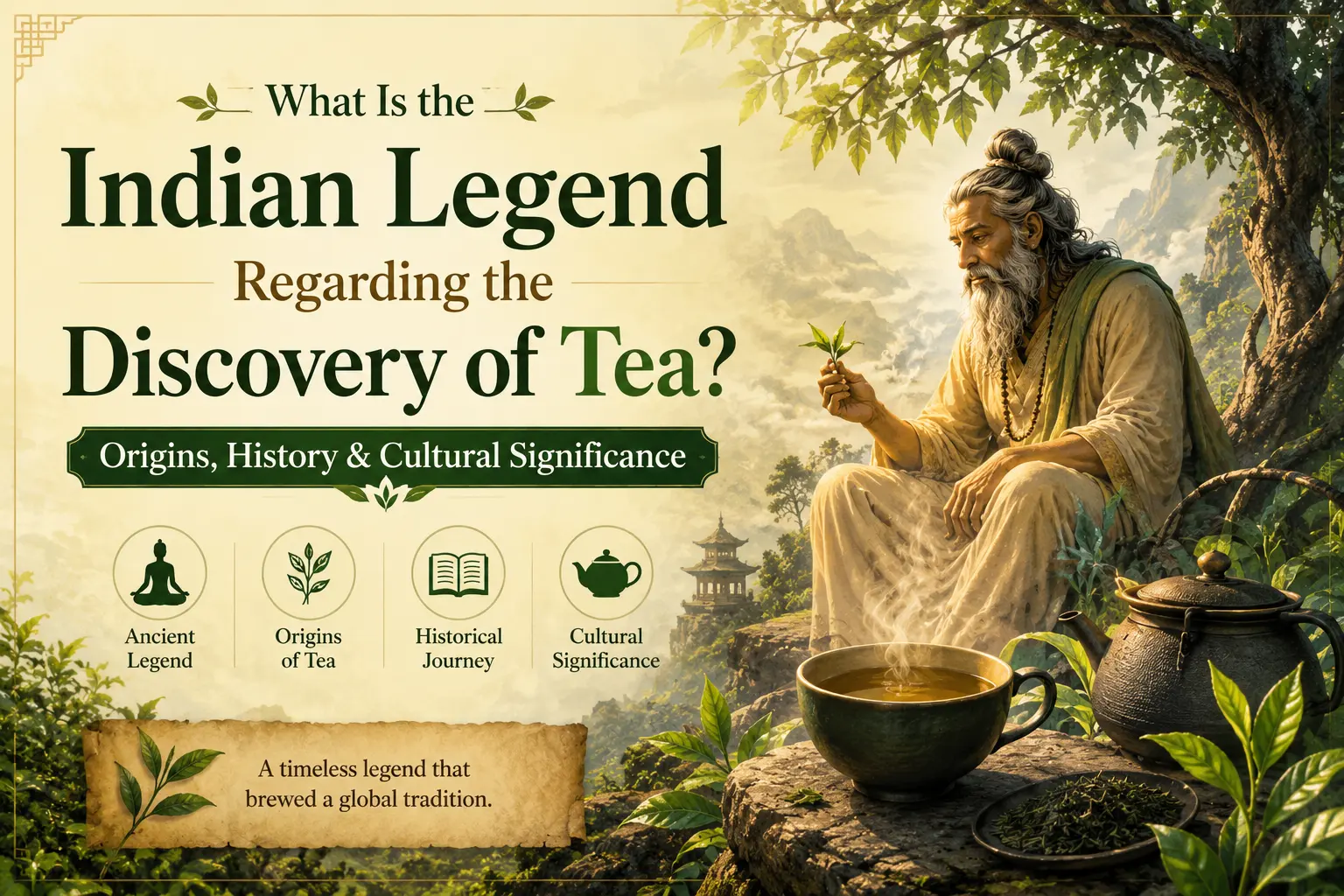
Tea is one of the world’s most consumed beverages, enjoyed daily by billions of people across Asia, Europe, Africa, and the Americas. In India especially, tea is more than just a drink — it is a cultural experience, a social ritual, and an emotional comfort. But many people still ask: what is the Indian legend regarding the discovery of tea?
The answer combines mythology, spirituality, trade history, and ancient storytelling. While tea’s botanical origins are often connected to China, India has its own fascinating legends surrounding the discovery and spread of tea. These stories have survived for centuries through oral traditions, Buddhist teachings, and regional folklore.
In this article, we will explore the Indian legend regarding tea discovery, its historical roots, how tea spread across India, and why the beverage became such a major part of Indian identity. We will also compare legend with historical evidence and examine tea’s economic and cultural impact in modern India.
The Ancient Story Behind Tea Discovery
When discussing what is the Indian legend regarding the discovery of tea, one of the most famous stories involves the Buddhist monk Bodhidharma. According to legend, Bodhidharma traveled from India to China during the 5th or 6th century CE to spread Buddhist teachings and meditation practices.
The story says that during a long meditation session, Bodhidharma became exhausted and sleepy. Frustrated by his inability to stay awake, he removed his eyelids and threw them onto the ground. From that spot, a tea plant miraculously grew. He later brewed the leaves and discovered that the drink helped maintain alertness and concentration during meditation.
Although this story blends mythology with symbolism, it became one of the most widely repeated legends connected to tea in India and East Asia. The tale highlights tea’s association with mindfulness, focus, spirituality, and endurance.
Many historians believe this legend contributed to the spread of tea culture among Buddhist communities across Asia.
Tea in Ancient India Before British Rule
Long before large-scale commercial tea plantations existed, local tribes in northeastern India already consumed wild tea leaves. Indigenous communities in Assam, Arunachal Pradesh, and nearby regions used tea plants for medicinal purposes and energy enhancement.
Historical evidence suggests that the Singpho tribe in Assam brewed tea leaves centuries before the British discovered Indian tea commercially. Some tribes fermented tea leaves or consumed them as herbal preparations.
This proves that tea was not entirely foreign to India. In fact, wild tea plants naturally grew in parts of the Indian subcontinent.
Researchers from the Tea Research Association have noted that Assam contains one of the oldest native tea plant varieties in the world: Camellia sinensis var. assamica. This discovery later transformed India into one of the largest tea producers globally.
The Connection Between Tea and Ayurveda
Another important aspect of understanding what is the Indian legend regarding the discovery of tea is the connection between tea and traditional Indian healing systems.
Ancient Ayurvedic practices often used herbs, spices, and plant infusions to improve health. Although modern black tea consumption became widespread later, herbal tea-like beverages existed in India for thousands of years.
Ingredients such as:
- Ginger
- Tulsi (holy basil)
- Cardamom
- Cinnamon
- Black pepper
- Cloves
were commonly brewed in hot water for medicinal purposes. These preparations resembled modern masala chai in many ways.
Ayurveda associated warm herbal drinks with digestion, immunity, and mental clarity. This may explain why tea eventually blended naturally into Indian daily life once commercial tea became accessible.
How Tea Became Popular Across India
While legends explain the spiritual and cultural side of tea, historical records show that tea consumption expanded dramatically during British colonial rule.
In the early 19th century, the British East India Company wanted to reduce dependence on Chinese tea imports. Explorers discovered that Assam already had native tea plants growing naturally.
By the 1830s, commercial tea plantations began developing across Assam and Darjeeling. British companies invested heavily in tea estates, transportation systems, and export networks.
According to India’s Tea Board, India now produces over 1.3 billion kilograms of tea annually, making it one of the largest tea-producing countries in the world.
Initially, tea was mostly exported to Britain and Europe. However, during the early 20th century, marketing campaigns encouraged Indians themselves to drink tea regularly.
Street-side chai vendors became common near railway stations, markets, and towns. Eventually, chai evolved into a national beverage enjoyed by people from all economic backgrounds.
The Symbolism of Tea in Indian Culture
To fully understand what is the Indian legend regarding the discovery of tea, it is important to recognize tea’s symbolic role in Indian society.
Tea represents:
Hospitality
Offering tea to guests is considered a sign of respect and warmth in many Indian households.
Conversation
Tea stalls often become gathering places where people discuss politics, sports, business, and everyday life.
Family Bonding
Morning and evening tea rituals bring families together daily.
Spiritual Calmness
Because of its historical connection with meditation and Ayurveda, tea is often associated with relaxation and mental peace.
This deep emotional connection explains why chai is deeply integrated into Indian identity.
Famous Indian Tea Regions
India’s tea industry developed into a global powerhouse due to several world-famous tea-growing regions.
Assam Tea
Known for its bold flavor and dark color, Assam tea is widely used in masala chai.
Key Facts:
- Grown at low altitudes
- Strong malty taste
- Major export product
Darjeeling Tea
Often called the “Champagne of Teas,” Darjeeling tea is globally respected for its delicate aroma.
Key Facts:
- Grown in Himalayan foothills
- Muscatel flavor profile
- Protected geographical indication status
Nilgiri Tea
Produced in southern India, Nilgiri tea has a smooth and fragrant character.
Key Facts:
- Cultivated in Tamil Nadu
- Available year-round
- Popular in blended teas
These regions contribute significantly to India’s agricultural economy and international exports.
Tea Production and Economic Importance
Tea is not only culturally important but also economically significant for India.
According to government industry reports:
- India employs more than 1 million workers directly in the tea industry.
- Millions more depend on tea indirectly through transportation, packaging, and retail.
- India ranks among the top tea exporters globally.
- Major export destinations include Russia, the UAE, the UK, Iran, and the United States.
Tea tourism has also become increasingly popular in regions like Darjeeling and Assam, where visitors explore tea gardens and heritage estates.
The industry contributes substantially to rural employment and women’s workforce participation.
Tea and Religion in India
Tea also holds interesting religious and spiritual connections in Indian traditions.
In Buddhist communities, tea is linked with meditation and mindfulness practices. The Bodhidharma legend reinforces this association.
In Hindu households, tea often accompanies religious gatherings and social ceremonies, although it is not considered a sacred ritual drink like milk or ghee offerings.
Sufi gatherings and mountain monasteries across northern India also commonly serve tea as part of hospitality traditions.
These diverse influences helped tea transcend religion and become universally accepted across Indian society.
The Evolution of Masala Chai
One of India’s most iconic beverages is masala chai — a spiced tea mixture combining black tea, milk, sugar, and aromatic spices.
Historians believe masala chai evolved from ancient Ayurvedic herbal drinks combined with British-introduced black tea.
Common ingredients include:
- Ginger
- Cardamom
- Cloves
- Cinnamon
- Fennel
- Black pepper
Today, masala chai is recognized worldwide as a signature Indian beverage.
Global café chains and tea brands now market chai-inspired drinks internationally, increasing interest in Indian tea culture.
Modern Scientific Benefits of Tea
Modern scientific research has supported many traditional beliefs about tea consumption.
Studies suggest tea may help with:
Antioxidant Support
Tea contains polyphenols and catechins that may reduce oxidative stress.
Mental Alertness
Caffeine and L-theanine can improve focus and concentration.
Heart Health
Some studies link moderate tea consumption with cardiovascular benefits.
Digestive Comfort
Spiced chai ingredients such as ginger and cardamom may aid digestion.
However, experts recommend balanced consumption without excessive sugar.
Tourism and Tea Heritage in India
Tea heritage tourism has become increasingly popular in recent years.
Travelers visit tea estates to experience:
- Tea tasting sessions
- Plantation tours
- Colonial-era tea bungalows
- Tea museums
- Mountain landscapes
Darjeeling’s scenic tea gardens attract thousands of international tourists annually.
Assam’s vast tea plantations also provide unique cultural experiences related to labor history, agriculture, and local traditions.
Myth vs Historical Reality
When exploring what is the Indian legend regarding the discovery of tea, it is important to separate mythological storytelling from documented history.
Legend Says:
- Bodhidharma discovered tea accidentally during meditation.
- Tea emerged through spiritual or miraculous origins.
Historical Evidence Shows:
- Wild tea plants naturally existed in Assam.
- Indigenous tribes consumed tea before British colonization.
- Commercial tea production expanded under British rule in the 19th century.
Both perspectives remain valuable. Legends preserve cultural meaning, while history explains economic and agricultural development.
Why Tea Remains Essential in Indian Life
Tea continues to dominate Indian daily routines because it combines affordability, comfort, social connection, and tradition.
From luxury hotels to roadside chai stalls, tea is accessible to nearly everyone.
India consumes billions of cups annually, making tea one of the country’s most influential beverages.
Even today, business meetings, family visits, train journeys, and celebrations often begin with the phrase:
“Would you like some chai?”
That simple question reflects centuries of history, storytelling, and shared cultural experience.
Final Thoughts
So, what is the Indian legend regarding the discovery of tea?
The most famous legend centers around Bodhidharma, the Indian Buddhist monk whose meditation story symbolically introduced tea as a drink of alertness and spiritual focus. Over time, this legend blended with India’s own herbal traditions, tribal tea usage, and colonial-era tea cultivation.
Today, tea represents far more than a beverage in India. It symbolizes hospitality, culture, spirituality, conversation, and economic strength.
Whether viewed through mythology or historical research, the story of tea remains one of the most fascinating cultural journeys in Indian history.
As global tea culture continues evolving, India’s deep-rooted relationship with tea ensures that chai will remain an enduring symbol of warmth and tradition for generations to come.
FAQs
Was tea originally discovered in India?
Tea plants naturally grew in parts of northeastern India, especially Assam. However, tea’s earliest recorded consumption is often linked to ancient China.
Who was Bodhidharma?
Bodhidharma was an Indian Buddhist monk associated with Zen Buddhism. Legends connect him to the symbolic discovery of tea.
Why is tea important in Indian culture?
Tea represents hospitality, family bonding, social interaction, and daily routine across India.
What is the most famous tea in India?
Assam tea and Darjeeling tea are among the most internationally recognized Indian teas.
Is masala chai traditional to India?
Yes. Masala chai evolved from Indian herbal drink traditions combined with black tea introduced during British colonial rule.
Read More Guide’s
Best Ensalada de Garbanzos Near Me: Find Fresh & Tasty Bowls
Vitilinox: Complete Guide to Benefits, Ingredients, Uses, and Scientific Perspective
