

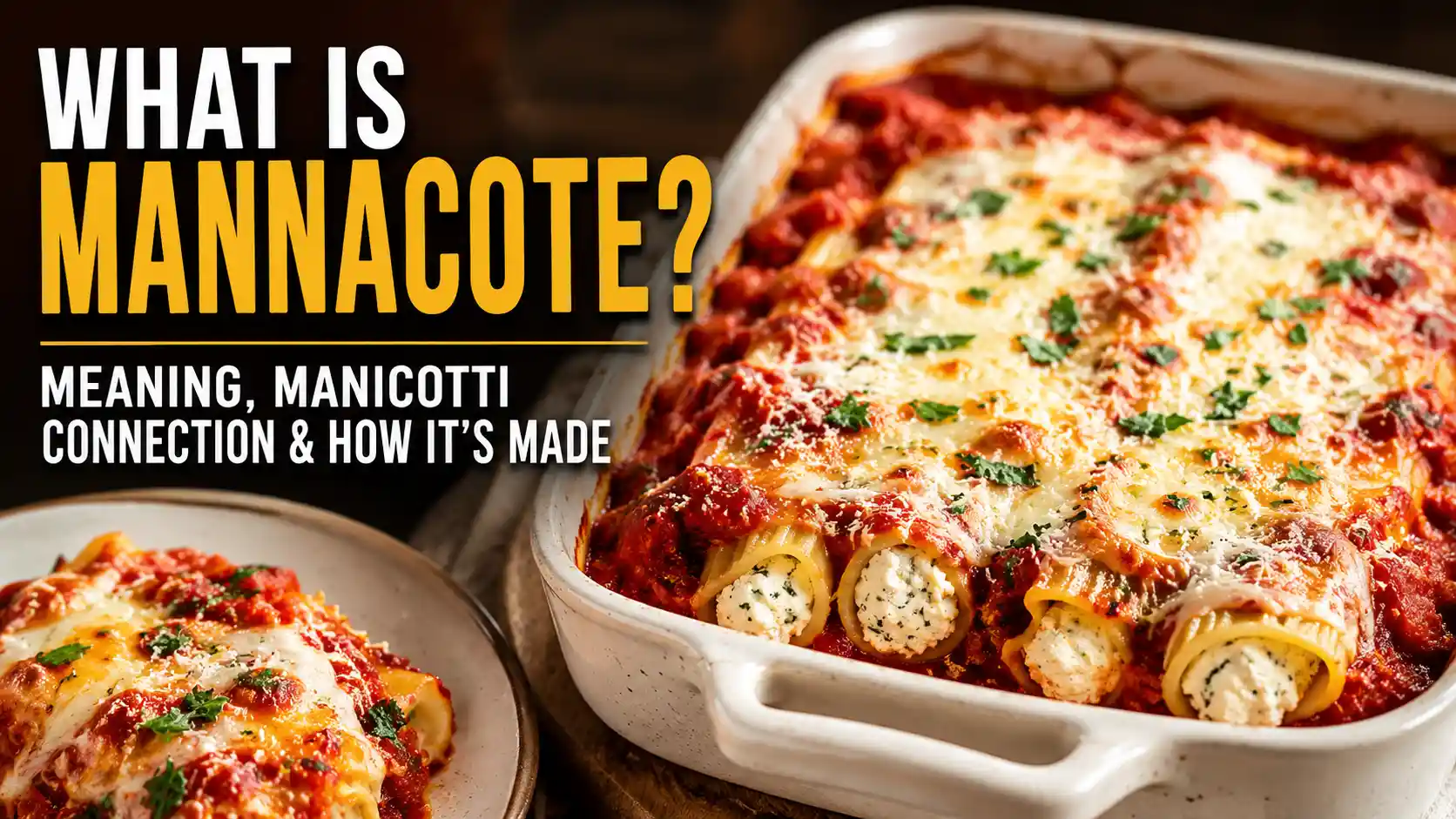
If you searched for Mannacote, you are probably trying to figure out whether it is a pasta dish, another name for manicotti, or a family term you have heard for years. In most food-related searches, Mannacote refers to a baked stuffed-pasta dish closely connected with manicotti. It is usually made with pasta tubes or thin pasta sheets filled with ricotta, cheese, herbs, spinach, or meat, then covered with sauce and baked.
The confusion is understandable. Food names often change slightly across families, regions, and spoken traditions. This guide explains what Mannacote usually means, how it compares with manicotti and cannelloni, what goes into the dish, and how to make a satisfying homemade version without watery filling or broken pasta.
What Does Mannacote Mean?
Mannacote is commonly used as an informal spelling, pronunciation variation, or family-style reference connected with manicotti. The established culinary term is manicotti, which refers to large pasta tubes that are often stuffed with ricotta or meat and served with tomato sauce.
You may see the word used differently from one household to another. Some people use it when talking about a cheese-filled baked pasta dish their family has always made. Others may use it after hearing “manicotti” pronounced in conversation and spelling it phonetically.
The most useful way to understand the term is simple: when Mannacote appears in a food context, it usually points you toward stuffed, baked manicotti-style pasta.
Important note: Mannacote does not have one universally fixed recipe. The filling, pasta style, sauce, and pronunciation can change from kitchen to kitchen. Read More: Best Green Tea for Weight Loss
Is Mannacote the Same as Manicotti?
For most practical purposes, yes. Mannacote is generally used in connection with manicotti rather than as a completely separate, standardized pasta category.
Manicotti is the familiar name for large tubular pasta shells filled with ingredients such as ricotta, mozzarella, Parmesan, spinach, herbs, or seasoned meat. The filled pasta is placed in a baking dish, covered with tomato sauce, topped with cheese, and baked until hot and bubbling.
The difference usually comes down to language and family usage rather than a strict cooking rule.
For example, one family may call the dish “Mannacote” even when using boxed manicotti shells. Another may use the same word for crepe-style pasta filled with ricotta and baked in sauce. The shared idea is stuffed pasta baked as a comforting family meal.
Mannacote vs. Manicotti vs. Cannelloni
These dishes are related, but they are not always identical.
| Feature | Mannacote | Manicotti | Cannelloni |
| Common use | Informal or family-style term | Established pasta term | Established pasta term |
| Pasta shape | Often manicotti-style tubes or pasta sheets | Large tubes or rolled pasta | Tubes or pasta sheets |
| Typical filling | Ricotta, cheese, spinach, herbs, or meat | Ricotta, cheese, spinach, or meat | Meat, vegetables, cheese, or ricotta |
| Sauce | Usually tomato sauce | Usually tomato sauce | Tomato sauce, béchamel, or both |
| Cooking style | Baked | Baked | Baked |
| Best description | A Mannacote-style stuffed pasta bake | Italian-American stuffed pasta dish | Stuffed baked pasta with broader regional variations |
The easiest distinction is this:
- Mannacote is often a family or informal term linked with manicotti.
- Manicotti usually refers to stuffed pasta tubes or rolled pasta baked with sauce.
- Cannelloni is a broader stuffed-pasta category and may use meat, vegetables, tomato sauce, béchamel, or different pasta formats.
Do not worry too much about finding one “correct” version. Focus on the pasta, filling, sauce, and baking method that suit your meal.
Where Does the Name Come From?
The recognized word manicotti comes from Italian and is connected with the idea of sleeves or sleeve-like shapes. That makes sense when you look at the pasta: the filled tubes resemble small sleeves holding a rich cheese or meat filling.
In Italian-American cooking, dishes often carry family pronunciation, regional habits, and recipe changes that developed over generations. One household may use dried pasta tubes. Another may use thin crepes, often called crespelle, rolled around a soft ricotta filling.
That is why Mannacote can mean something slightly different depending on who is using the word. The dish may look different, but the heart of it stays familiar: filled pasta, savory sauce, melted cheese, and a baked finish.
What Is Mannacote Made Of?
A traditional Mannacote-style pasta bake usually has four parts: pasta, filling, sauce, and topping.
Pasta
You can make the dish with:
- Dried manicotti shells
- No-boil manicotti shells
- Fresh pasta sheets
- Thin crepes or crespelle
- Wide pasta sheets rolled around the filling
Dried tubes are convenient, but they can tear if overcooked or handled roughly. Pasta sheets and crepes are easier to roll and can be especially useful when you want a softer, more delicate result.
Filling
The most common filling starts with ricotta cheese. You can mix it with:
- Mozzarella
- Parmesan or Pecorino Romano
- Egg
- Fresh parsley
- Basil
- Spinach
- Garlic
- Black pepper
- Nutmeg
- Cooked ground beef, sausage, or chicken
Whole-milk ricotta usually creates a richer filling than low-fat ricotta. If the ricotta looks wet, drain it before mixing. Extra moisture can make the finished pasta watery.
Sauce
Tomato-based sauce is the classic choice. You can use:
- Homemade marinara
- Tomato basil sauce
- Slow-cooked meat sauce
- A good-quality jarred marinara
- Tomato cream sauce for a richer variation
The sauce should be loose enough to keep the pasta moist but not so thin that the filling becomes watery.
Topping
A simple cheese topping works best:
- Shredded mozzarella
- Parmesan
- Pecorino Romano
- Fresh basil or parsley after baking
How to Make Classic Mannacote-Style Manicotti
A Mannacote-style baked pasta dish is easier to make when you treat the filling, pasta, and sauce as separate parts. The goal is not to rush. It is to create a filling that stays creamy, pasta that stays intact, and sauce that supports the dish without drowning it.
Step 1: Prepare the Filling
Start with ricotta in a large bowl. Add mozzarella, Parmesan or Pecorino, one egg, chopped herbs, salt, black pepper, and a small pinch of nutmeg if you enjoy it.
If you are adding spinach, cook it first and squeeze out as much liquid as possible. Wet spinach is one of the main reasons stuffed pasta turns watery.
Mix only until combined. Overmixing is not disastrous, but it can make the filling loose and less pleasant to spoon or pipe.
Step 2: Prepare the Pasta
Follow the instructions on your pasta package, especially if you are using dried or no-boil manicotti shells.
When using boiled shells:
- Cook them only until barely tender.
- Drain them carefully.
- Lay them in a single layer on a lightly oiled tray.
- Let them cool enough to handle before filling.
For no-boil shells:
- Use enough sauce in the baking dish.
- Cover the dish tightly while baking.
- Check that the pasta has softened before serving.
For pasta sheets or crepes:
- Spread filling along the center.
- Roll into tubes.
- Place seam-side down in the sauce.
Step 3: Fill the Pasta
A piping bag is the easiest tool, but a zip-top bag with one corner snipped off also works well.
Fill each tube from both ends so the center does not stay empty. Do not pack the filling too tightly. Pasta can split during baking if it is overfilled.
If you are using pasta sheets or crepes, spread the filling in a neat line and roll gently.
Step 4: Assemble the Dish
Spread a thin layer of sauce across the bottom of a baking dish. This helps prevent sticking and keeps the pasta moist.
Arrange the filled tubes in a single layer. Spoon more sauce over the top, making sure the pasta is covered but not swimming in sauce.
Cover the dish with foil for the first part of baking. Remove the foil near the end, add mozzarella and Parmesan, then bake until the cheese is melted and lightly golden.
Step 5: Rest Before Serving
Let the dish rest for about 10 minutes after it comes out of the oven.
This small step matters. It gives the sauce and filling time to settle, so the pasta serves in neat portions instead of sliding apart on the plate.
Why Your Mannacote Filling Turns Watery
A watery filling can make the dish taste bland and leave sauce pooling at the bottom of the pan. The problem usually comes from moisture, not from a lack of cheese.
Here are the most common causes.
Ricotta Was Too Wet
Ricotta naturally contains moisture. Some brands are wetter than others.
To improve the texture, place the ricotta in a fine strainer or cheesecloth-lined sieve for 20 to 30 minutes before mixing the filling. You do not need to dry it completely. You only want to remove excess liquid.
Spinach Was Not Squeezed Dry
Cooked spinach holds far more water than most people expect. After cooking, cool it slightly, wrap it in a clean towel or cheesecloth, and squeeze firmly.
This one step can make the difference between a creamy filling and a watery one.
Too Much Sauce Was Added Inside the Pasta
The filling should be rich and thick. Let the sauce sit around and over the pasta rather than mixing large amounts directly into the ricotta.
The Dish Was Served Too Quickly
Freshly baked pasta can look loose at first. Resting it for a few minutes helps the cheese and sauce set.
Common Mannacote Mistakes to Avoid
Overboiling the Pasta
Manicotti shells become fragile when cooked too long. They can tear while filling or collapse in the baking dish.
Cook them only until flexible enough to handle. They will continue softening in the oven.
Overfilling the Tubes
It is tempting to pack in as much filling as possible, but too much can split the pasta. Fill the shell generously without forcing the mixture inside.
Using Too Little Sauce
No-boil pasta needs moisture to soften. Even regular shells benefit from sauce around the edges.
If the dish looks dry before baking, add a little more sauce around the pasta rather than pouring it directly onto the filling.
Underseasoning the Ricotta
Ricotta has a mild flavor. Taste the filling before adding egg if possible. It should taste slightly more seasoned than you think it needs because pasta and sauce will soften the flavor.
Baking Uncovered the Entire Time
A covered dish traps steam and helps the pasta cook evenly. Bake covered first, then uncover near the end to brown the cheese.
Skipping the Resting Time
A brief rest makes the dish easier to cut, serve, and enjoy.
Make-Ahead, Freezing, and Reheating Tips
Mannacote-style pasta is an excellent make-ahead meal because the flavors develop well after assembly.
Make It Ahead
You can assemble the dish, cover it tightly, and refrigerate it before baking. Add a small extra spoonful of sauce if the pasta will sit for several hours, especially when using no-boil shells.
When you are ready to bake, let the dish sit at room temperature briefly while the oven heats. Then bake according to your pasta type and recipe method.
Freeze Before Baking
For the best texture, freeze the assembled dish before baking.
- Assemble the pasta in a freezer-safe dish.
- Cover tightly with plastic wrap, then foil.
- Label it with the date.
- Thaw in the refrigerator before baking when possible.
A frozen dish may need extra baking time, so check that the center is fully hot before serving.
Reheat Leftovers Safely
Store leftovers in shallow containers and refrigerate them promptly. When reheating, heat the center thoroughly rather than only warming the edges.
For food safety, leftovers should be reheated until they reach 165°F / 74°C. Covering the dish while reheating helps keep the pasta from drying out.
Serving Ideas for Mannacote
A rich baked pasta dish pairs best with lighter sides that add freshness and crunch.
Try serving it with:
- Garlic bread or crusty Italian bread
- Arugula salad with lemon dressing
- Roasted broccoli
- Green beans with garlic
- Grilled zucchini
- Marinated olives
- A simple tomato and cucumber salad
For a fuller dinner, add roasted chicken, Italian-style meatballs, or sautéed mushrooms.
FAQs About Mannacote
Is Mannacote a real Italian word?
Mannacote is not the standard culinary term most dictionaries use for this dish. In food searches and family usage, it is usually connected with manicotti or a similar stuffed baked pasta dish.
What is the difference between Mannacote and manicotti?
Mannacote is generally an informal or family-style term, while manicotti is the established name for stuffed pasta tubes or a stuffed baked pasta dish. In many kitchens, the dishes are prepared in the same way.
Is Mannacote the same as cannelloni?
Not exactly. Both are stuffed baked pasta dishes, but cannelloni can use different fillings, sauces, and pasta formats. Mannacote-style dishes are usually closer to ricotta-filled manicotti.
Can you make Mannacote without manicotti shells?
Yes. You can use fresh pasta sheets, lasagna sheets, or thin crepes. Roll the filling inside, place the rolls seam-side down in sauce, and bake as you would with manicotti tubes.
Why do manicotti shells break?
They usually break because they were overcooked, handled while too hot, overfilled, or packed too tightly into the baking dish. Cooking them only until barely tender helps prevent tearing.
What cheese is best for the filling?
Ricotta is the classic base. Mozzarella adds melt, while Parmesan or Pecorino adds saltiness and depth. Whole-milk ricotta generally gives the creamiest result.
Can you freeze Mannacote?
Yes. Assemble it in a freezer-safe dish, wrap it tightly, and freeze before baking. Thaw it in the refrigerator when possible, then bake until hot throughout.
What should you serve with Mannacote?
Serve it with garlic bread, a crisp green salad, roasted vegetables, or a light vegetable side. The goal is to balance the rich cheese and sauce.
Final Thoughts
Mannacote is best understood as a family-style or informal name connected with manicotti: stuffed pasta filled with cheese, herbs, spinach, or meat, baked in sauce, and finished with melted cheese.
Once you know that connection, making it becomes much simpler. Use a thick ricotta filling, avoid excess moisture, handle the pasta gently, and give the dish time to rest after baking. Whether your family uses pasta tubes, fresh sheets, or crepes, the result should feel warm, generous, and made for sharing.
