

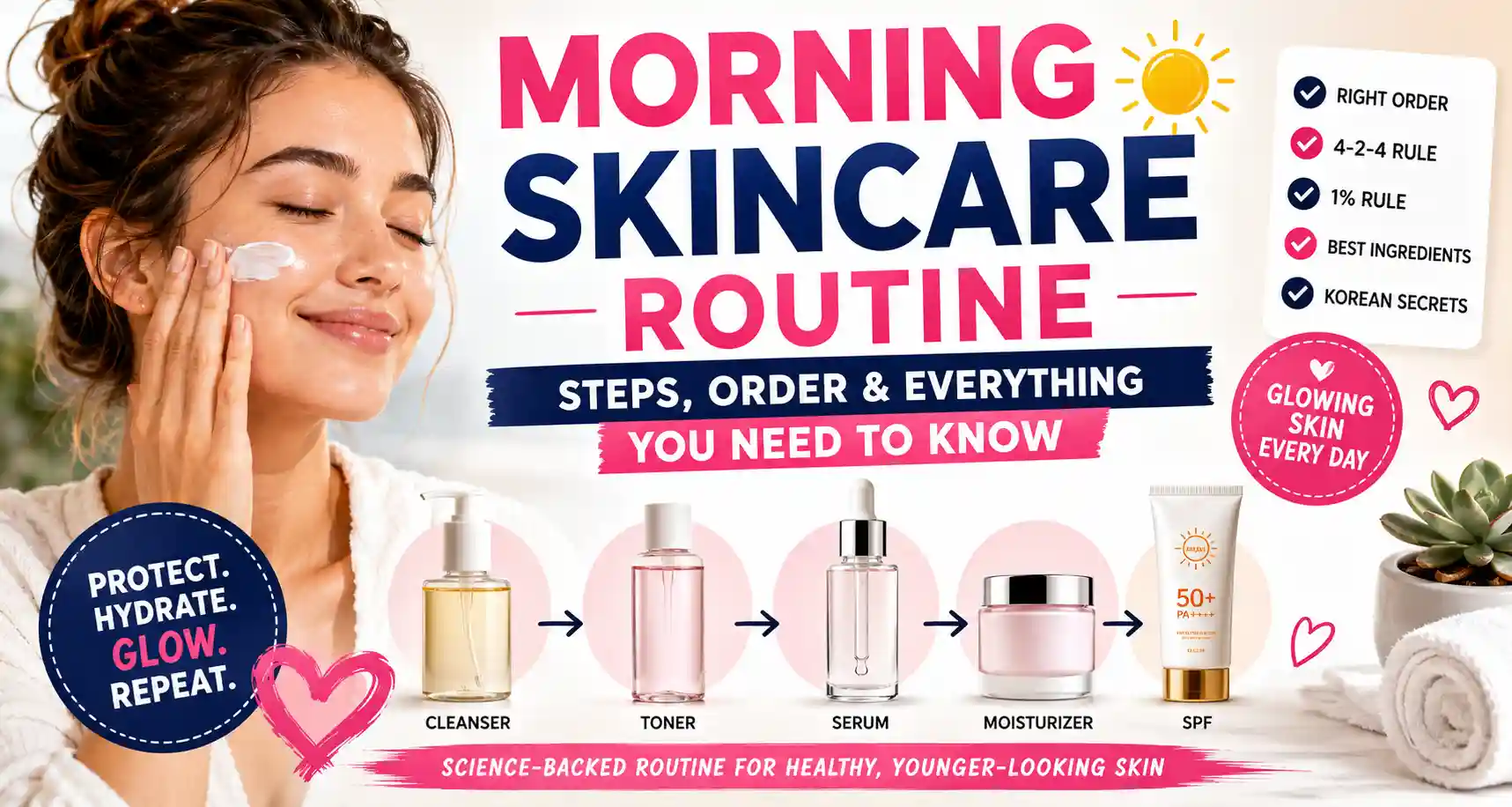
Every morning, your skin faces UV rays, pollution, and oxidative stress before you’ve even had your first coffee. A well-structured morning skincare routine is not a luxury or a passing trend. It is your skin’s first and most important line of defense. Whether you spend three minutes or fifteen, the products you apply. The order you apply them determine how protected, hydrated. Resilient your skin will be for the rest of the day.
This guide covers every element of an effective morning routine. The correct layering order, the 4-2-4 cleansing method, the 1% rule. Ingredients you should never mix, and why Korean skincare has become the global standard for skin health.
What Is a Morning Skincare Routine and Why Does It Matter?
A morning skincare routine is a sequential series of skincare steps applied after waking, designed to protect and prepare the skin for daily environmental exposure. Unlike a night routine which focuses on repair and cell renewal a morning routine prioritizes protection from UV radiation, antioxidant defense, and hydration retention throughout the day.
The skin barrier, a protective layer of lipids and proteins on the surface of the skin, is your body’s first defense against environmental damage. A proper morning routine supports and strengthens that barrier rather than disrupting it.
Why Is a Morning Routine Different from a Night Routine?
Morning and night routines serve fundamentally different biological purposes. In the morning, the goal is protection: you are building a shield against sun damage, pollution, and free radicals before you step outside. In the evening, the goal shifts to repair: ingredients like retinol and heavier moisturizers support the skin’s natural regeneration cycle, which is most active during sleep.
This is also why certain active ingredients particularly retinol and strong exfoliating acids like AHA and BHA belong in a night routine rather than a morning one. Applied in the morning, they can increase photosensitivity and make UV damage worse, not better.
How Many Steps Should a Morning Skincare Routine Have?
A functional morning skincare routine needs a minimum of three steps: a cleanser, a moisturizer, and SPF. These three form the non-negotiable core that any dermatologist would recommend. From there, you can add a toner, one or two serums, and an eye cream based on your skin’s needs and how much time you have.
More steps are not inherently better. The American Academy of Dermatology consistently emphasizes that consistency using a few well-chosen products every single day produces better results than an elaborate routine performed inconsistently.
What Is the Correct Order to Apply Skincare Products in a Morning Skincare Routine?
The correct order to apply skincare products follows a simple principle: thinnest to thickest. Products with smaller molecules and lower viscosity are applied first so. They can penetrate the skin; heavier products are applied on top to seal them in. Applying in the wrong order can physically block lighter products from reaching the skin at all.
Here is the correct layering sequence:
- Cleanser removes overnight sebum, sweat, and residue
- Toner restores pH and preps skin to absorb what follows
- Essence (optional) a thin, hydrating K-beauty step applied before serums
- Serum concentrated active ingredients targeting specific concerns
- Eye cream (optional) a lighter formulation for the delicate eye area
- Moisturizer seals in hydration and prior layers
- SPF the final, non-negotiable step that protects all the work beneath it
Why Does Layering Order in Skincare Actually Matter?
Order matters because of two key factors: molecular weight and pH. Lighter, water-based products have smaller molecules that penetrate deeper into skin. Applying a thick moisturizer first creates a physical barrier that prevents a serum applied afterward from reaching the dermis. The molecular weight hierarchy from watery toner to viscous SPF is not arbitrary. It reflects how skin actually absorbs each product type.
pH is the second factor. Toner is applied before serum because it slightly acidifies the skin’s surface, returning it to its natural pH range of approximately 4.5 to 5.5. Many active serums, particularly vitamin C, work best in an acidic environment. Toning first ensures the skin is at the right pH when the serum is applied.
Should You Apply Toner Before or After Serum?
Toner always comes before serum. This is one of the most frequently misunderstood steps in layering. Toner is a thin, water-based liquid it has the smallest molecules of any step after cleansing, so it penetrates fastest and sets the foundation. Serum, though thinner than a moisturizer, is more concentrated and slightly heavier than toner. Applying toner after serum would sit on top of the active layer rather than beneath it, reducing its efficacy.
What Are the 7 Steps of Skin Care in a Korean Morning Routine?
The 7-step (and more commonly cited 10-step) Korean skincare routine was introduced to Western audiences largely through the work of Charlotte Cho, co-founder of K-beauty retailer Soko Glam, whose 2015 book and online platform brought the method to mainstream attention. The philosophy behind the routine is not complexity for its own sake it is a commitment to skin health through layered hydration and prevention rather than reactive treatment.
A 7-step Korean morning routine typically follows this structure:
- Oil cleanser dissolves sebum, sunscreen residue, and impurities
- Water-based cleanser removes remaining water-soluble debris
- Exfoliant (2-3 times per week, not daily) AHA or BHA to remove dead skin cells
- Toner pH restoration and first layer of hydration
- Essence a concentrated, watery hydrating step unique to K-beauty
- Serum or ampoule targeted active ingredients
- Moisturizer and SPF protection as the final layer
What Is the Difference Between a Toner and an Essence in Korean Skincare?
Toner and essence look similar both are thin, watery liquids but they serve different purposes. A toner’s primary job is to balance the skin’s pH after cleansing and remove any last traces of cleanser residue. An essence, a concept largely developed in South Korea and popularized by brands like Missha and SK-II, is a deeply hydrating step that delivers concentrated fermented or hydration-active ingredients to the skin before a serum is applied.
Think of toner as preparation and essence as the first layer of treatment. Not all routines require both, but in the K-beauty philosophy, essence is the step that produces the distinctive ‘glass skin’ effect associated with Korean skin quality.
Do You Need All 7 Steps Every Morning?
No. The 7-step routine is a complete framework, not a mandatory checklist. Steps like exfoliation (only recommended 2-3 times per week), essence, and eye cream are optional additions based on your skin type and goals. A more minimal version cleanser, toner, serum, moisturizer, SPF covers the core of what the K-beauty philosophy recommends and is practical for a daily time-limited morning.
What Is the 4-2-4 Rule in Skincare and How Does It Work?
The 4-2-4 rule in skincare is a cleansing technique that involves 4 minutes of massage with an oil-based cleanser, 2 minutes of cleansing with a water-based foaming cleanser, and 4 minutes of rinsing with lukewarm water. Developed and popularized within K-beauty culture, the method is a specific, time-structured form of double cleansing that emphasizes the duration of each phase rather than simply using two different cleansers.
The logic behind the timing is supported by cosmetic chemistry: oil cleansers need adequate contact time to break down sebum, oil-based makeup, and sunscreen residue through the like-dissolves-like principle. A 30-second oil cleanse, which is what most people do, is not enough contact time for effective emulsification of SPF in particular.
Is the 4-2-4 Method for Everyone or Just Certain Skin Types?
The 4-2-4 method is most beneficial for oily and combination skin types, heavy makeup wearers, and those who use water-resistant SPF formulations that are difficult to remove with a single cleanser. People with dry or sensitive skin should approach the method carefully 10 total minutes of cleansing can strip natural oils and compromise the skin barrier if done daily.
For dry or sensitive skin, a simplified version a shorter oil cleanse followed by a gentle, non-foaming water-based cleanser achieves the same double-cleanse benefit without the risk of over-cleansing.
What Is Double Cleansing and Is It the Same as the 4-2-4 Method?
Double cleansing is the broader practice of using an oil-based cleanser followed by a water-based cleanser in sequence. The 4-2-4 method is a specific, time-structured variant of double cleansing that adds precise duration guidelines to each phase. You can double cleanse without following the 4-2-4 timing but the 4-2-4 rule is always a form of double cleansing.
Which Two Serums Cannot Be Used Together in a Morning Skincare Routine?
Certain serum combinations create chemical conflicts that reduce their individual effectiveness or increase the risk of skin irritation. The most important conflicts to know before building your morning routine are listed below.
| Combination to Avoid | Why It’s Problematic | Better Approach |
| Vitamin C + AHA/BHA | Both are acidic. Using together can cause over-exfoliation and irritation, particularly for sensitive skin. | Use vitamin C in the morning; AHA/BHA at night. |
| Retinol + Vitamin C | Vitamin C is most stable at a low pH; retinol becomes irritating at low pH. Together, they cancel out and cause sensitivity. | Vitamin C in the morning; retinol at night only. |
| Benzoyl Peroxide + Vitamin C | Benzoyl peroxide oxidizes vitamin C, rendering it inactive before it can benefit the skin. | Use them on alternating days or in separate routines. |
| Two exfoliating acids (e.g., AHA + BHA) | Combining two chemical exfoliants significantly increases irritation and barrier disruption risk. | Choose one exfoliant per session; alternate types on different days. |
Can You Use Vitamin C and Niacinamide Together in the Morning?
This is one of the most debated ingredient combinations in skincare. Earlier research suggested that vitamin C and niacinamide could combine to form nicotinic acid, a compound that causes flushing. Current research, including formulation studies published in cosmetic chemistry literature, suggests that when both are used in stable, modern formulations and at typical concentrations (vitamin C at 10-20%, niacinamide at 2-5%), the reaction is minimal and the combination is generally well-tolerated.
If you are new to either ingredient, introduce them separately first. Once your skin has adjusted to each, they can typically be used together without issue. Starting with separate morning and evening applications remains the most cautious approach.
Which Serums Should Be Saved for the Night Routine Instead?
Retinol a vitamin A derivative and one of the most evidence-backed anti-aging ingredients available should always be used in the evening. Retinol degrades in UV light and increases skin photosensitivity. Using it in a morning skincare routine without extremely high SPF significantly reduces its efficacy and increases the risk of sun damage.
Strong exfoliating acids (AHA and BHA) also belong in the evening for the same reason: they increase photosensitivity and work most effectively during the skin’s natural overnight renewal cycle.
Why Is Korean Skin So Good and What Country Is Number One in Skincare?
South Korea’s reputation for exceptional skin quality is not a marketing myth it reflects genuine differences in skincare culture, product innovation, and daily habits that have developed over decades. Several specific factors account for it.
- SPF culture: Daily SPF use has been a mainstream habit in South Korea since the early 2000s, driven by both cultural attitudes toward sun protection and government public health messaging. UV radiation accounts for approximately 80% of visible facial aging, according to research published in the Journal of Investigative Dermatology consistent daily SPF use alone produces measurable long-term differences in skin appearance.
- Multi-step hydration: The layered hydration approach toner, essence, serum saturates the skin with moisture at multiple molecular levels. Hyaluronic acid, a humectant that holds up to 1,000 times its weight in water, is a staple ingredient across Korean formulations.
- Prevention-first philosophy: Korean skincare culture emphasizes prevention rather than correction. Daily sunscreen and antioxidant protection from a young age reduces cumulative damage that would otherwise require corrective treatments.
- Hallyu (Korean Wave): The global spread of Korean pop culture, beginning in the late 1990s and accelerating through the 2010s, brought K-beauty into mainstream Western consciousness and created enormous commercial investment in skincare R&D.
What Daily Habits Contribute to Korean Skin Quality?
Beyond products, the daily habits are central: thorough cleansing (including the double cleansing approach), consistent SPF application including on overcast days, high water intake, a diet rich in antioxidants, and the cultural practice of treating skincare as a non-negotiable daily ritual rather than a cosmetic luxury.
Which Countries Lead in Skincare Innovation and Investment?
South Korea leads globally in skincare research and development, holding the highest concentration of cosmetic patent applications per capita. Japan follows with a long tradition of pharmaceutical-grade skincare formulations and a focus on minimalist, efficacious ingredients brands like SK-II, with its Pitera fermentation technology, are globally recognized. France is the third major hub, with pharmaceutical-skincare crossover brands like La Roche-Posay and Vichy producing dermatologist-recommended formulations backed by clinical research. The United States contributes significantly through mass-market innovation, with brands like CeraVe developed in consultation with dermatologists and centered on ceramide-based barrier repair reaching global scale.
What Is the 1% Rule in Skincare and Does It Apply to Morning Routines?
The 1% rule in skincare is the principle that an active ingredient must be present at a concentration of 1% or higher in a formulation to produce a clinically measurable effect on the skin. Ingredients present at lower concentrations may be listed on the label but are unlikely to deliver the benefit associated with that ingredient at an effective dose.
This matters practically because cosmetic labeling regulations in most markets require ingredients to be listed in descending order of concentration down to the 1% threshold. Ingredients present at or below 1% can be listed in any order after that point. When a powerful active appears near the bottom of an ingredient list, surrounded by preservatives and fragrance, it is almost certainly present at a sub-therapeutic concentration.
How Do You Read a Skincare Ingredient List to Apply the 1% Rule?
Find preservatives on the ingredient list common ones include phenoxyethanol, ethylhexylglycerin, and sodium benzoate. These are almost always used at concentrations between 0.5% and 1%. Any active ingredient listed after these preservatives is present at less than 1% and is unlikely to deliver its marketed benefit at a meaningful level.
Common morning serum actives and their effective concentration ranges: niacinamide works at 2-5%, vitamin C is effective at 10-20%, hyaluronic acid is effective even at very low concentrations (0.1-2% depending on molecular weight).
Which Morning Routine Ingredients Are Most Effective at 1% or Above?
Niacinamide at 2% or above has demonstrated clinically measurable effects on pore appearance, sebum regulation, and skin tone in multiple peer-reviewed studies. Vitamin C at 10% or above shows measurable antioxidant activity and collagen support. Peptides chains of amino acids that signal skin to produce collagen and elastin are effective at concentrations typically between 3-10 parts per million and represent one of the few active categories where higher on the ingredient list is not strictly required for efficacy due to their high potency at micro-concentrations.
How Can You Take 10 Years Off Your Face with Your Morning Skincare Routine?
The phrase ‘take 10 years off your face’ sounds like marketing language, but the underlying science is genuine: consistent morning skincare habits that prevent UV damage and support skin hydration produce measurable, visible differences in skin aging over time. The key word is prevent the most effective anti-aging strategy is protecting skin from damage before it accumulates.
Why SPF Is the Single Most Anti-Aging Step in Any Morning Routine
UV radiation specifically UVA rays, which penetrate glass and cloud cover is responsible for approximately 80% of visible facial aging, including wrinkles, uneven pigmentation, and loss of elasticity. This figure, derived from twin studies and UV exposure research published in the Journal of Investigative Dermatology, is the most important statistic in all of skincare. Applying SPF 30 or higher every morning including in winter and on cloudy days, as the American Academy of Dermatology recommends is the single highest-impact step any skincare routine can include.
The effect is cumulative but consistent: people who apply SPF daily show measurably less photoaging after five to ten years compared to those who apply it only occasionally or not at all.
Which Morning Routine Habits Show Results Fastest?
SPF is protective from the first day of use it does not need time to ‘work.’ Vitamin C, applied consistently before SPF, shows visible brightening and tone-evening effects typically within four to eight weeks. Hyaluronic acid provides immediate surface-level hydration and a plumping effect that reduces the appearance of fine lines the same day it is applied. Peptides work more slowly consistent use over 12 weeks is typically needed to observe changes in skin firmness and elasticity.
The pattern is clear: prevention (SPF, antioxidants) produces long-term results; hydration (hyaluronic acid, moisturizer) produces immediate ones. A morning skincare routine that includes both is one of the most evidence-supported approaches to skin health available.
Final Thoughts
Building a Morning Skincare Routine That Actually Works
The science behind morning skincare is not complicated, even if the product landscape can feel overwhelming. At its core, a morning skincare routine does three things: it cleanses what accumulated overnight, it delivers active ingredients to address specific concerns, and most importantly it protects the skin from the UV and environmental damage that cause the majority of visible aging.
Start with the minimum: cleanser, moisturizer, and SPF 30 or higher. Add a vitamin C serum when you’re ready for the next step. Learn the 1% rule so you choose products that actually contain effective doses of their active ingredients. Understand which ingredients conflict so you never accidentally cancel out the products you paid for.
Everything else the 4-2-4 method, the 7-step K-beauty approach, the essence, the eye cream is refinement on top of that foundation. The best morning skincare routine is the one you follow every single morning without exception.
