

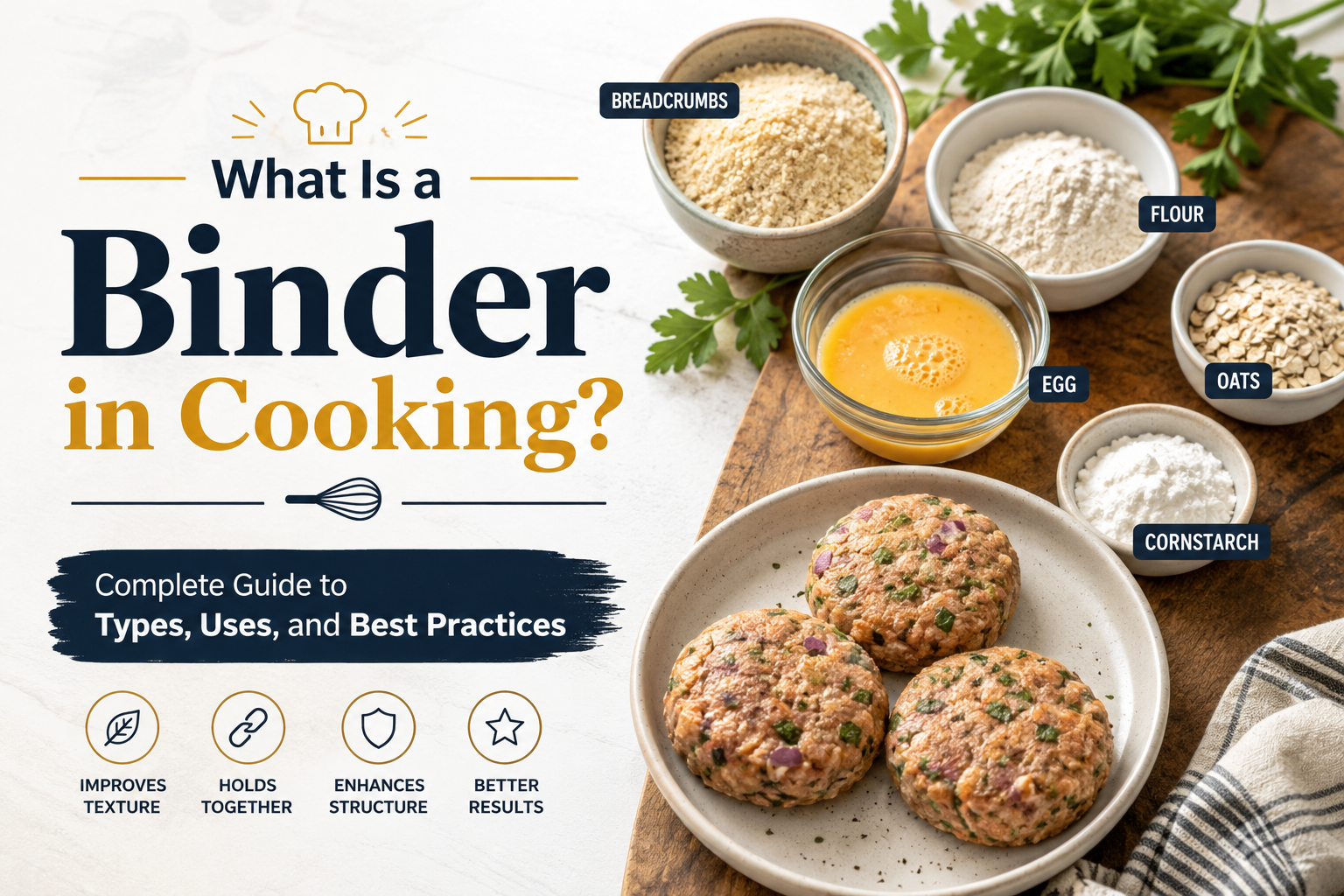
Food preparation is both an art and a science. While flavors often receive the most attention, texture and structure are equally important in creating successful dishes. One essential culinary concept that helps ingredients stay together is the binder. Whether you’re making meatballs, veggie burgers, crab cakes, croquettes, or baked goods, binders play a critical role in achieving the right consistency.
Many beginner cooks follow recipes without understanding why certain ingredients are included. However, learning the purpose of binders can improve your cooking skills and help you adapt recipes with confidence.
In this comprehensive guide, you’ll learn what is a binder in cooking, how binders work, the most common types, when to use them, healthy alternatives, and practical tips for achieving perfect results every time.
Understanding the Role of a Binder in Cooking
A binder is an ingredient that helps hold other ingredients together, creating a cohesive mixture that maintains its shape during cooking, baking, frying, or serving.
Without a binding agent, many dishes would crumble, fall apart, or develop an unpleasant texture. Binders create stability by connecting ingredients and helping them retain moisture while maintaining structural integrity.
For example:
- Meatballs hold together because of eggs and breadcrumbs.
- Veggie burgers stay intact through starches or legumes.
- Cakes maintain structure through eggs and flour proteins.
- Crab cakes rely on binding ingredients to prevent breaking apart.
In simple terms, a binder acts like culinary glue that keeps ingredients connected.
Why Binders Are Important in Food Preparation
Binders perform several important functions beyond simply holding ingredients together.
1. Improve Structure
The primary role of a binder is structural support. It prevents foods from crumbling or breaking apart during handling and cooking.
2. Enhance Texture
Binders contribute to tenderness, softness, chewiness, or firmness depending on the recipe.
3. Retain Moisture
Many binding ingredients help trap moisture, resulting in juicier foods and better mouthfeel.
4. Improve Consistency
They ensure ingredients distribute evenly throughout a mixture.
5. Increase Stability
Foods maintain their intended shape during baking, frying, grilling, or steaming.
The Science Behind Food Binders
Understanding the science behind binding agents helps explain why they are so effective.
Most binders work through one or more of the following mechanisms:
Protein Coagulation
Proteins change structure when heated, creating networks that hold ingredients together.
Examples include:
- Eggs
- Dairy proteins
- Gelatin
Starch Gelatinization
When starches absorb water and heat, they swell and form a gel-like structure.
Examples include:
- Flour
- Cornstarch
- Potato starch
- Tapioca starch
Moisture Absorption
Some ingredients absorb excess liquid and create cohesion.
Examples include:
- Breadcrumbs
- Oats
- Crushed crackers
Natural Adhesion
Certain foods naturally become sticky when mashed or blended.
Examples include:
- Beans
- Potatoes
- Bananas
Common Types of Binders Used in Cooking
Let’s examine the most widely used binding ingredients in kitchens around the world.
Eggs
Eggs are among the most versatile binders available.
When heated, egg proteins coagulate and form strong networks that hold ingredients together.
Common applications:
- Meatloaf
- Meatballs
- Cakes
- Cookies
- Patties
- Casseroles
Advantages:
- Strong binding power
- Adds moisture
- Improves texture
Potential drawback:
- Not suitable for vegan diets.
Breadcrumbs
Breadcrumbs absorb moisture and help stabilize mixtures.
Frequently used in:
- Meatballs
- Burgers
- Croquettes
- Stuffed vegetables
Advantages:
- Affordable
- Easy to find
- Improves texture
Flour
Flour serves both as a thickener and a binder.
Used in:
- Batters
- Doughs
- Cakes
- Sauces
The proteins glutenin and gliadin combine with water to form gluten, which contributes significantly to structure.
Oats
Oats are increasingly popular as healthy binders.
Common uses:
- Veggie burgers
- Meatloaf
- Energy bites
Benefits:
- High fiber content
- Good moisture retention
- Nutritional value
Mashed Potatoes
Potatoes contain starch that helps ingredients adhere together.
Popular in:
- Fish cakes
- Potato croquettes
- Vegetable patties
Cornstarch
Cornstarch is widely used in both cooking and baking.
Functions include:
- Binding
- Thickening
- Stabilizing
Common applications:
- Asian stir-fry sauces
- Coatings
- Gluten-free recipes
Gelatin
Gelatin is derived from collagen and creates a firm gel structure.
Frequently found in:
- Desserts
- Marshmallows
- Mousses
- Aspics
Cheese
Certain cheeses contribute binding properties when melted.
Examples:
- Mozzarella
- Cheddar
- Parmesan
Common uses:
- Casseroles
- Stuffed dishes
- Savory baked recipes
Natural Binders Used Around the World
Different cuisines use unique ingredients to create cohesion.
Chickpeas
Widely used in Middle Eastern cooking.
Examples:
- Falafel
- Patties
- Fritters
Rice
Cooked rice acts as a natural binder in many Asian dishes.
Beans
Black beans and kidney beans are popular plant-based binding ingredients.
Lentils
Lentils provide both nutrition and structure.
Common in:
- Vegetarian burgers
- Loaves
- Patties
Bananas
Mashed bananas work particularly well in baking.
Often used as an egg substitute.
Best Binders for Meat-Based Recipes
Ground meat often requires additional support to maintain shape.
Popular combinations include:
| Recipe | Common Binder |
| Meatballs | Egg + Breadcrumbs |
| Meatloaf | Egg + Oats |
| Burgers | Egg |
| Sausage Patties | Breadcrumbs |
| Crab Cakes | Egg + Mayo + Breadcrumbs |
A balance is important. Too much binder can make food dense and heavy.
Best Binders for Vegetarian and Vegan Cooking
Plant-based cooking often relies on alternative binding ingredients.
Popular vegan binders include:
Flax Egg
Mix:
- 1 tablespoon ground flaxseed
- 3 tablespoons water
Allow mixture to sit for 5–10 minutes.
The resulting gel mimics the binding ability of eggs.
Chia Egg
Prepared similarly to flax eggs.
Benefits include:
- High omega-3 content
- Excellent moisture retention
Mashed Beans
Beans naturally become sticky when processed.
Ideal for:
- Burgers
- Fritters
- Patties
Nut Butters
Nut butters help bind:
- Protein balls
- Granola bars
- Healthy snacks
What Is a Binder in Cooking for Baking?
In baking, binding ingredients help create structure and prevent products from falling apart.
Examples include:
- Eggs
- Flour
- Gluten
- Starches
For cakes, cookies, and muffins, binders are essential because they support air pockets formed during mixing and baking.
Without proper binding, baked goods may become crumbly or collapse.
Signs Your Recipe Needs More Binder
Many cooking problems can be traced back to insufficient binding.
Common signs include:
- Patties breaking apart
- Meatballs crumbling
- Burgers splitting on the grill
- Cakes collapsing
- Cookies falling apart
When this occurs, adding a small amount of binder often solves the problem.
Signs You Are Using Too Much Binder
More is not always better.
Excessive binder can cause:
- Dense texture
- Rubbery consistency
- Dryness
- Heavy mouthfeel
- Reduced flavor intensity
Professional chefs typically add only enough binder to achieve structural stability.
Healthier Binder Alternatives
Consumers today often seek cleaner-label ingredients.
Several healthy options provide effective binding properties.
Ground Flaxseed
Rich in:
- Fiber
- Omega-3 fatty acids
- Plant protein
Chia Seeds
Offer:
- Antioxidants
- Fiber
- Healthy fats
Rolled Oats
Provide:
- Whole grains
- Slow-digesting carbohydrates
Sweet Potatoes
Contain natural starches and nutrients.
Pumpkin Purée
Useful in both sweet and savory recipes.
Gluten-Free Binding Options
People with gluten sensitivity or celiac disease need alternative binders.
Effective choices include:
- Potato starch
- Tapioca starch
- Cornstarch
- Rice flour
- Xanthan gum
- Psyllium husk
These ingredients are widely used in gluten-free baking and cooking.
Commercial Food Industry Use of Binders
Binders are also important in large-scale food manufacturing.
According to food science research and industry reports, binding agents contribute significantly to product consistency, shelf stability, and texture management across processed foods.
Industries commonly use:
- Modified starches
- Cellulose derivatives
- Gelatin
- Gums
- Protein isolates
These ingredients help manufacturers maintain uniform quality across millions of products produced annually.
Practical Tips for Using Binders Successfully
Follow these professional recommendations:
Measure Carefully
Small changes can significantly affect texture.
Mix Thoroughly
Ensure binders distribute evenly throughout the mixture.
Allow Resting Time
Many binders perform better after resting.
Examples:
- Flax eggs
- Chia eggs
- Breadcrumb mixtures
Avoid Overmixing
Overworking ingredients can create tough textures.
Test Small Batches
Cook one small portion before preparing the entire recipe.
Frequently Asked Questions
What is the most common binder in cooking?
Eggs are generally considered the most common binder because they provide strong structural support while adding moisture and richness.
Can flour be used as a binder?
Yes. Flour acts as a binder through starch gelatinization and gluten development.
What can replace eggs as a binder?
Popular substitutes include:
- Flax eggs
- Chia eggs
- Mashed bananas
- Applesauce
- Beans
Why do my burgers fall apart?
Common causes include insufficient binder, excessive moisture, or overhandling.
Are breadcrumbs always necessary?
No. Many recipes use oats, potatoes, beans, or eggs instead.
Final Thoughts
Understanding what is a binder in cooking can dramatically improve your results in the kitchen. Whether you’re preparing meatballs, veggie burgers, cakes, casseroles, or baked goods, binders provide the structure that keeps ingredients working together.
From traditional ingredients like eggs and breadcrumbs to modern plant-based alternatives such as flaxseed and chia, there are numerous options available for every dietary preference. The key is selecting the right binder for your recipe and using the correct amount.
As cooking techniques continue to evolve and consumer preferences shift toward healthier and specialized diets, binders remain one of the most important tools for achieving ideal texture, consistency, and presentation. Mastering their use will help you create dishes that not only taste great but also maintain the perfect form from preparation to serving.
Read More Guide’s
Interesting News Hearthstats: Hearthstone Updates, and Community Insights
Dirty Ways to Make Money: Risky Income Methods and Alternatives
