

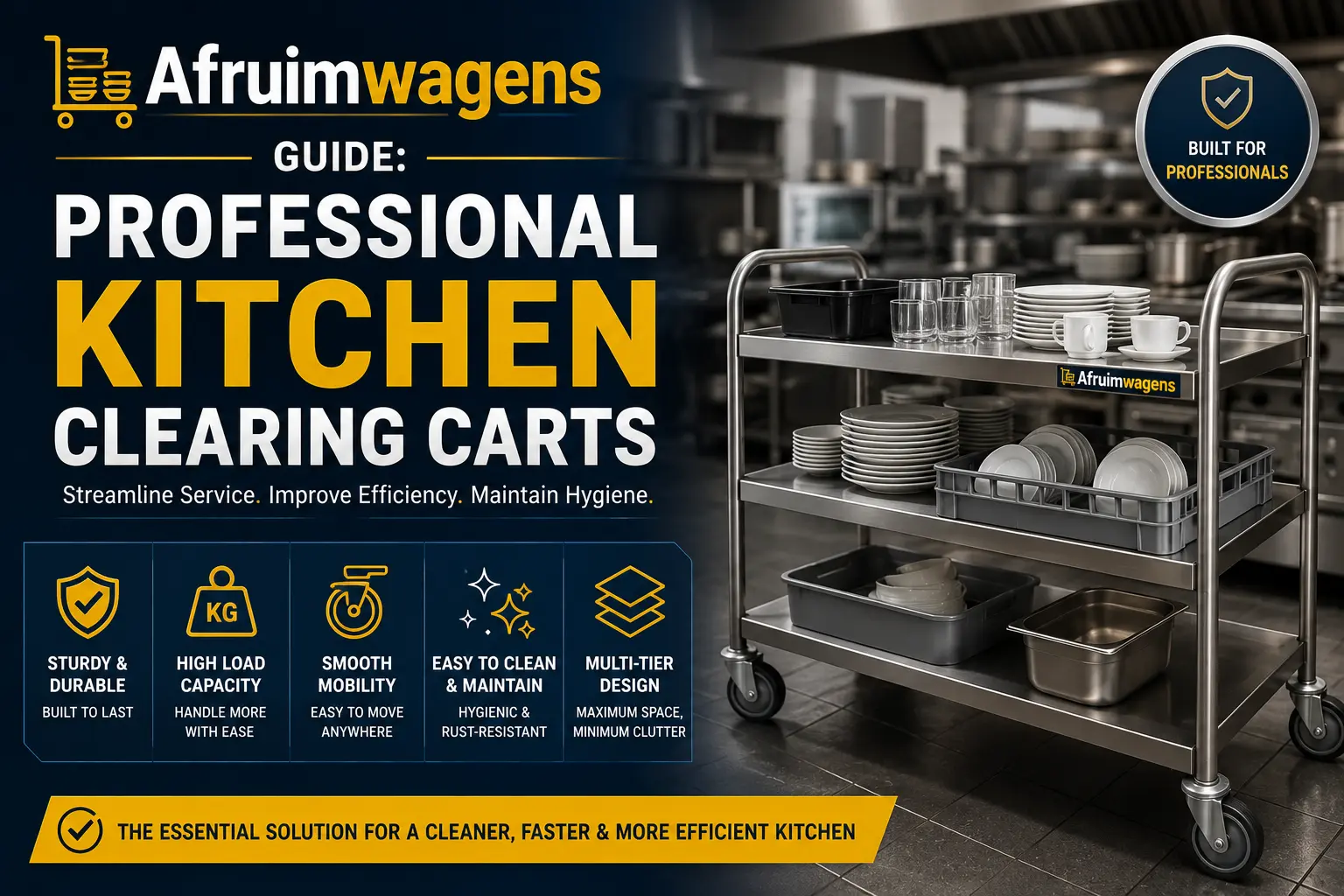
In the high-pressure world of professional hospitality, success is often measured in seconds. Whether you are running a bustling city-center bistro or a massive hotel banquet hall, the speed at which you can clear tables and return dirty dishes to the dishwashing area—the “spoelkeuken”—directly impacts your table turnover and guest satisfaction. This is where the humble afruimwagens (clearing trolleys) move from being mere furniture to critical operational assets.
An afruimwagens is more than just a cart with wheels; it is a specialized tool designed to handle the heavy lifting of service recovery. In this deep dive, we will explore why these trolleys are indispensable, how to choose between various materials, and the technical specifications that separate a standard cart from a professional-grade clearing powerhouse.
The Strategic Importance of the Afruimwagen
In any dining environment, the sight of a server struggling with a mountain of precarious plates is a red flag for both safety and service quality. Using afruimwagens allows your staff to consolidate their efforts. Instead of making five trips to a large table, a single staff member can clear the entire station in one smooth motion.
Core Benefits for Your Business
| Benefit | Impact on Operations |
| Increased Turnover | Faster clearing means the next party can be seated sooner. |
| Ergonomic Safety | Reduces the strain on staff wrists, backs, and shoulders. |
| Noise Reduction | Modern trolleys are designed with quiet-running wheels to maintain ambiance. |
| Better Organization | Integrated bins for cutlery and waste keep the “spoelkeuken” organized. |
RVS vs. Plastic: Choosing Your Material
When selecting afruimwagens, the first major decision is the material. Most professional kitchens choose between RVS (Stainless Steel) and high-impact Polypropylene (Plastic). Each has distinct advantages depending on your specific environment.
1. RVS (Stainless Steel) Afruimwagens
Stainless steel is the industry standard for a reason. It is incredibly durable, heat-resistant, and aesthetically professional.
- Hygiene: RVS is non-porous, meaning bacteria have nowhere to hide. It is easy to sanitize with high-temp cleaning agents.
- Durability: These trolleys can handle significant weight—often up to 150kg or more—without buckling.
- Aesthetics: If the clearing process happens in view of guests, a polished RVS cart looks sleek and clean.
2. Plastic/Polypropylene Afruimwagens
For more casual environments or heavy-duty “back of house” work, plastic options are a fantastic alternative.
- Weight: They are significantly lighter, making them easier for staff to maneuver through narrow hallways.
- Noise Dampening: Plastic doesn’t “clatter” as much as metal, which is helpful in quiet dining rooms.
- Cost-Effectiveness: Generally more affordable, allowing you to scale your fleet as your business grows.
Technical Specifications to Look For
Not all afruimwagens are created equal. When browsing for your next unit, pay close attention to these three technical features:
1. Wheel Quality and Braking
The wheels (or castors) are the most common point of failure. Look for non-marking rubber wheels with ball bearings for smooth movement. At least two of the wheels should have high-quality locking brakes to ensure the cart doesn’t roll away on uneven floors or during loading.
2. Tier Spacing and Depth
Standard trolleys come with 2 or 3 tiers. However, for specialized clearing, you may need a unit that can accommodate gastronorm (GN) bins or specialized cutlery holders. Deep-ledged tiers prevent liquids from spilling onto the floor, which is a major slip-and-fall hazard in a busy kitchen.
3. Load Capacity
Always check the “per-shelf” and “total” load capacity. Overloading a trolley can lead to frame warping and wheel damage. For high-volume catering, a reinforced frame is non-negotiable.
Implementing the “Station System”
One of the most effective ways to use afruimwagens is to create mobile “buffer stations.” Instead of taking every plate directly to the dishwasher, servers can place them on a centrally located trolley. Once full, the trolley is swapped for an empty one. This keeps the service staff on the floor—where the guests are—rather than stuck in the kitchen.
Explore our guides on Madelyn Cline Net Worth in 2026: Career, Income, Lifestyle & Relationship
Maintenance and Safety Tips
To ensure your investment lasts for years, a simple maintenance routine is required:
- Daily Wipe Down: Food acids can eventually pit even stainless steel. A daily clean prevents corrosion.
- Wheel Inspection: Check for hair or debris caught in the wheels weekly. This is the #1 cause of “stiff” trolleys.
- Bolt Tightening: Vibrations from moving over tile grout can loosen bolts over time. A quick monthly check keeps the frame rigid.
Conclusion: The Quiet Hero of the Kitchen
The afruimwagens may not be as flashy as a new combi-oven or a high-end espresso machine, but its role in your business’s success is just as vital. By streamlining the “messy” part of the job, you allow your team to focus on what really matters: providing an exceptional guest experience.
Key Takeaways:
- Material Choice: Use RVS for hygiene and looks; use plastic for weight and noise control.
- Safety First: Prioritize high-quality wheels and brakes to prevent workplace accidents.
- Operational Flow: Use trolleys as mobile stations to keep staff on the floor and tables turning.
As the hospitality industry becomes more competitive, the brands that win are the ones that master the details. Start with your clearing process, and the rest of your operations will follow suit.
Frequently Asked Questions (FAQ)
1. How many tiers should my afruimwagens have?
A 3-tier trolley is standard for most restaurants as it offers the best balance of capacity and height. 2-tier models are better for tall items like coffee urns or large buckets.
2. Are afruimwagens easy to assemble?
Most professional models are shipped “flat-pack” to save on shipping costs but can be assembled in under 15 minutes with basic tools.
3. Can I use these trolleys for outdoor catering?
Yes, but ensure you choose a model with larger, more rugged wheels if you plan to move over grass or uneven pavement.
4. What is the best way to clean a plastic trolley?
Warm soapy water is usually sufficient. Avoid using highly abrasive scouring pads, as they can create scratches where bacteria can grow.
5. How do I prevent the trolley from being too noisy?
Look for “silent-run” wheel options and ensure all bolts are tightly secured. Placing a thin rubber mat on the shelves can also dampen the sound of clattering plates.
